
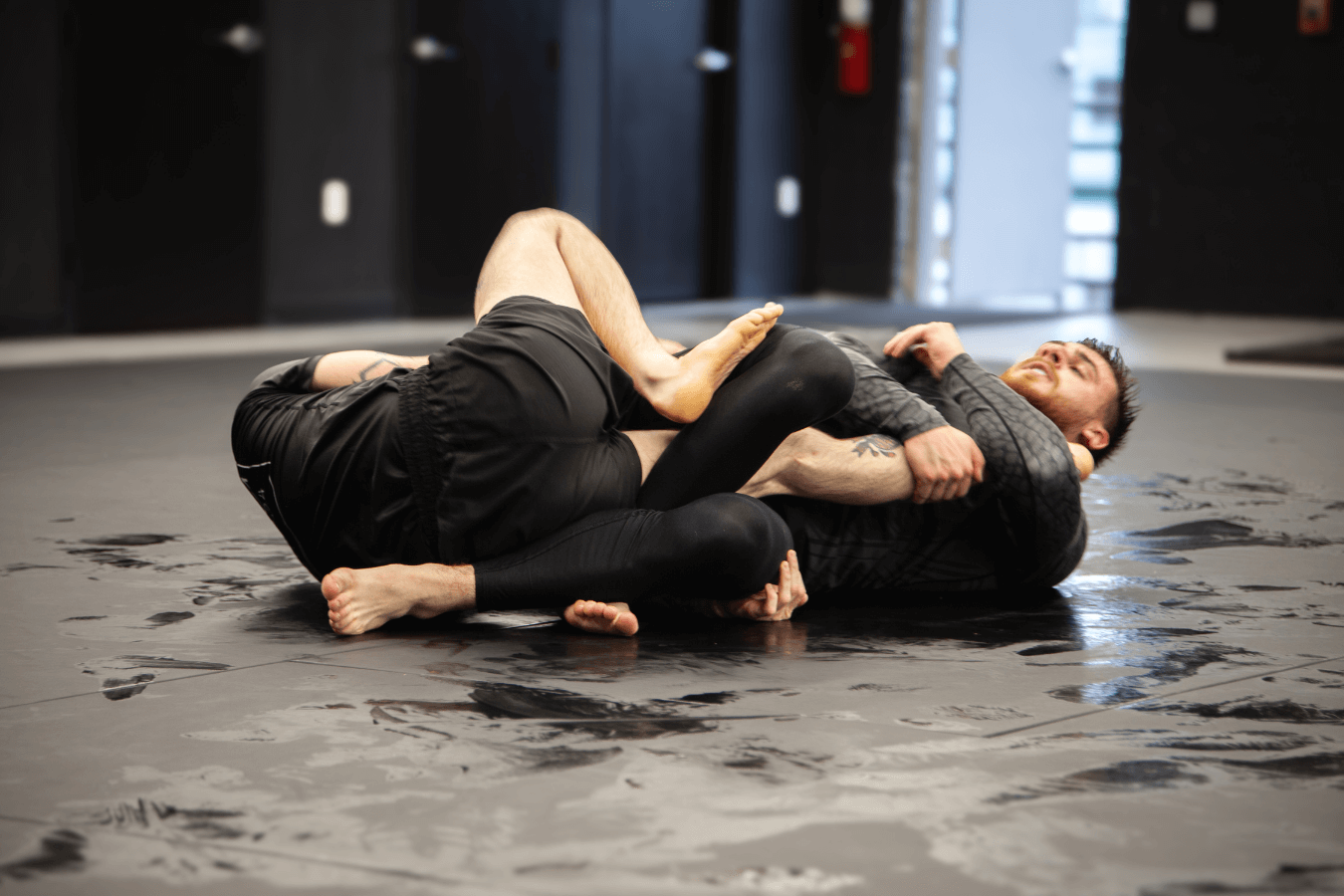
Grappling turns strength, speed, and stamina into usable power when the pressure is real.
If you train for sport, fitness, or just to feel more capable in your own body, you already know a truth most people ignore: conditioning is only valuable if you can apply it. Grappling gives you that bridge from gym strength to on-demand performance, because every round asks you to generate force, manage fatigue, and keep making smart decisions while someone is actively resisting you.
In our Bridgeport classes, we see athletes and everyday adults chase the same goal from different starting lines: move better, hit harder bursts of effort, and recover faster between them. Grappling naturally builds those qualities because it blends pulling, pushing, bracing, rotating, and sprint-like scrambles into one continuous skill.
And the best part is that the payoff is not limited to a single “grappler” type. Whether you are a lifter looking for more athletic carryover, a runner who wants durability, or someone returning to training after time away, this style of work teaches your body to produce power with control.
Why Grappling Builds Athleticism Faster Than Most Training Alone
A lot of training plans separate qualities into neat boxes: strength day, cardio day, mobility day. Life and competition are not that tidy. Grappling forces multiple systems to cooperate at the same time, which is why you can feel it in your lungs and your grip and your hips all in the same minute.
You are constantly switching between isometric tension and explosive movement. One second you are holding posture or pinning under pressure, and the next second you are bridging, standing up, or changing direction. That repeated shift teaches your body how to express power without needing a perfect setup.
There is also a mental piece that matters for performance. When you train Grappling, you learn to stay composed while you work hard. You practice solving problems with your body, under fatigue, with consequences that are immediate and honest. Over time, that can sharpen your ability to perform when your heart rate is high.
The Athletic Chain Reaction: Grip, Core, Hips, and Breath
A lot of “explosive power” discussions focus on legs, but in real movement the chain starts earlier. In Grappling, the hands connect first, the core transmits force, and the hips finish it. You learn how to create tension without locking up, then release it at the right moment.
Grip strength and endurance improve because you are constantly fighting for control: sleeves, wrists, head position, underhooks, body locks. Your core is rarely resting because you are either resisting rotation or creating it. And your hips are always involved, because most escapes, sweeps, and takedown finishes come from hip extension and angle changes.
Breathing ties it together. You quickly learn that holding your breath makes you tired in a way that feels unfair. So we coach pacing and breath control, especially for newer students who are strong but burn out early.
Explosive Power, Defined for Real Life and Sport
Explosive power is not just jumping high or sprinting fast. It is the ability to create force quickly, repeatedly, in awkward positions, and still be coordinated. That is why it shows up so clearly in submission grappling in Bridgeport: you cannot rely on one perfect movement. You have to produce power from whatever position you end up in.
Power in Grappling looks like bridging hard from bottom, popping your hips into a guard retention movement, or exploding to your feet during a scramble. It also looks like the quieter kind of power: staying heavy in top pressure, maintaining posture in a tight spot, or holding a pin without gassing.
Research in combat sports and martial arts supports what we see on the mat. Strength and power training interventions, including plyometric-style work, tend to produce small-to-moderate improvements in strength and power measures in martial arts athletes. But Grappling adds something extra: it teaches you to express that strength against a moving opponent, not just a barbell.
How Our Training Turns Technique Into Power
Technique is the foundation, but the mat is where technique becomes athletic output. We structure training so you can learn mechanics first, then build speed and intensity gradually. That matters, because “explosive” does not mean reckless. It means efficient.
We spend time on positioning and leverage so your power has somewhere to go. If your hips are out of line or your base is unstable, pushing harder just makes you tired. When your alignment is right, you can create force with less effort, which is the real athletic advantage.
We also use progressive resistance through drilling and live rounds. Drilling gives you clean repetitions, and sparring forces adaptation. That combination is what turns a movement you “know” into a movement you can hit when it counts.
What You Feel First as You Adapt
Most people notice a few changes early, even within the first month or two, especially if training is consistent. It is not magic, but it is noticeable.
• Your grip stops failing as quickly, even when you are sweaty and tired
• Your hips feel more awake, especially in lateral movement and pivots
• Your core endurance improves in a way sit-ups never quite matched
• Your recovery between hard efforts gets faster, so you can push again sooner
• Your balance improves because you are constantly fighting for base
Those changes translate well outside the room, too. Carrying awkward loads, moving furniture, climbing stairs fast, or getting up from the ground feels different when your body is used to producing force under pressure.
Conditioning That Actually Transfers
“Cardio” in Grappling is not a steady jog. It is closer to interval work mixed with strength endurance. You spike your output, settle briefly, then spike again. That pattern is one reason Grappling can reshape work capacity so effectively.
Elite grapplers are typically characterized by strength endurance, solid aerobic conditioning, and mobility with end-range strength. We aim to build those qualities without turning every session into a grind. If you are always crushed, you cannot learn. If you never feel pressure, you do not adapt. We try to live in the productive middle.
A practical example: holding someone in side control requires sustained tension and micro-adjustments. Escaping requires repeated bursts. Over a round, your body learns to switch gears without falling apart, and that is a huge advantage for athletic performance.
Mobility With Strength, Not Just Flexibility
Explosive athletes often get tight. Grappling helps because it demands movement through angles you might not train otherwise: hip external rotation, thoracic rotation, neck positioning, and shoulder stability. But the important word is strength. Passive flexibility is not enough when someone is trying to fold you.
We coach movement quality so you can build range gradually and keep it. That includes learning how to frame with your arms without over-stressing your shoulders, how to rotate on your upper back safely, and how to use your legs as active shields and hooks.
When mobility is paired with control, you can move faster with less fear of awkward strain. That is one of the less-hyped benefits of adult submission grappling in Bridgeport: durability. You learn how to fall, roll, post, and absorb pressure intelligently.
The Skill of Producing Force While Staying Calm
A surprisingly athletic trait is emotional control under stress. In Grappling, you practice staying relaxed enough to think while still working hard. That is difficult at first, because new students often tense everything at once. We get it. It is a normal learning phase.
Over time, you learn to reserve explosive output for moments that matter. You stop trying to win every inch with brute force and start choosing when to surge, when to settle, and when to transition. That pacing skill improves performance in almost any sport, and even in everyday situations where you need steady effort without panic.
A Typical Path From New Student to More Explosive Athlete
People often ask how long it takes to feel more powerful. The honest answer depends on consistency, sleep, and how you train. But the progression tends to follow a pattern.
1. Weeks 1 to 4: You learn positions, basic movement, and how to breathe under tension
2. Weeks 5 to 8: Your timing improves and you start using hips and frames instead of pure effort
3. Months 3 to 6: You develop “repeatable explosions” and recover faster between scrambles
4. Beyond 6 months: Your power becomes more efficient, and you start dictating pace more often
This is also where training becomes more fun, because you can feel the chess match. You still work hard, but it is directed. Your body is not just surviving the round. It is solving it.
How We Make Training Accessible Without Watering It Down
Explosive power is built through quality reps and consistent exposure to realistic resistance. That does not mean every class needs to be maximal. We keep training progressive, so you can build intensity without feeling like you have to “prove” yourself on day one.
We also welcome different athletic backgrounds. Some students come in strong but stiff, others are mobile but lack strength endurance, and some are returning to training after years away. Grappling meets you where you are because the same core movements can be scaled: more or less resistance, more or less complexity, and more or less pace.
If your goal is performance, we help you connect the dots. If you lift, we will show you how your strength expresses through posture, frames, and hip extension. If you run or play field sports, we will help you translate endurance into repeatable bursts and better body control.
Take the Next Step
If you want athletic power that shows up when you are tired, off-balance, and under real resistance, Grappling is one of the most direct paths there. Our approach keeps technique at the center while still developing strength endurance, conditioning, mobility, and the calm decision-making that makes performance reliable.
When you are ready to train in a focused, welcoming environment, we would love to have you at Connecticut Submission Grappling. We built our program for real adults in Bridgeport who want progress you can feel, not just talk about.
No prior experience is needed to begin. Join a grappling class at Connecticut Submission Grappling today.