
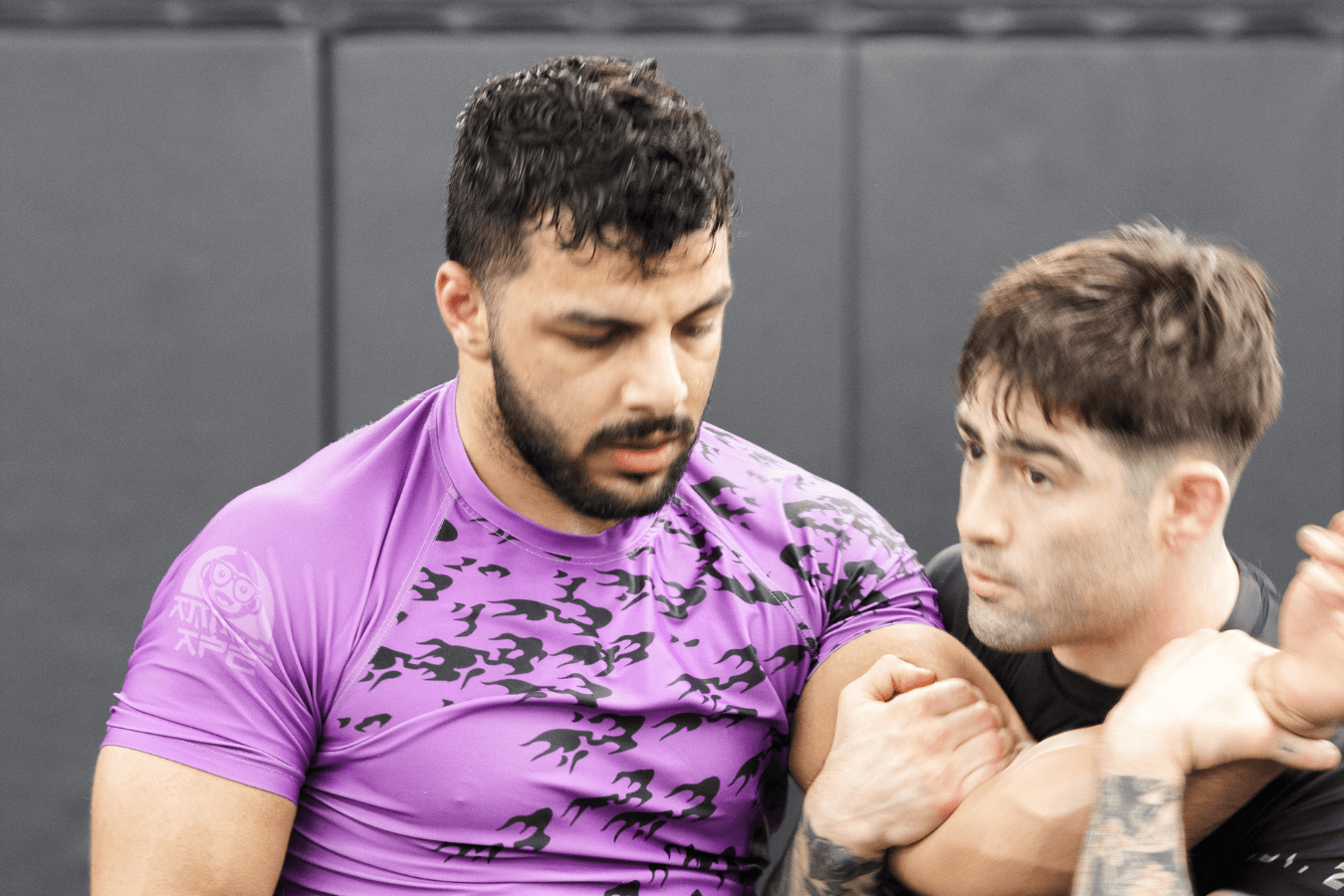
Grappling has a funny way of turning strangers into trusted training partners faster than almost anything else.
Grappling isn’t just a workout or a skill set, it’s a shared language you learn with other people, one round at a time. In Bridgeport, that matters, because most of us aren’t only looking for “fitness” in the abstract. You want a place where you can show up consistently, be recognized, and feel like your effort actually connects you to something real.
In our room, friendships usually start quietly. You learn someone’s name, you slap hands, you try a technique, and you both laugh when it goes sideways. Then you do it again, a little cleaner. Over time, that repeated process builds trust. Not the talk-about-it kind, but the earned kind you feel when someone is trying hard and still taking care of you.
This article breaks down how Grappling naturally creates community in Bridgeport, what we do to make that environment welcoming, and how you can plug into it even if you’re brand new or returning after time away.
Why Grappling Creates Real Community (Not Just Small Talk)
There’s a difference between being in the same room as people and actually training with them. Grappling forces connection in a practical way: you’re working through problems together, under pressure, with immediate feedback. That combination makes bonding almost unavoidable.
When you train, you’re learning timing, balance, control, and escapes with partners who are also figuring it out. That shared struggle becomes a shortcut to familiarity. You start noticing who moves smoothly, who is relentless, who is patient, who is quietly technical. And people notice you, too, which makes it easier to belong.
In submission grappling in Bridgeport, the best communities aren’t built on hype. They’re built on consistency. Showing up. Helping newer people. Getting tapped and coming back anyway. Those habits create a culture where friendships last because they were built during real effort.
The “Pressure and Safety” Balance That Builds Trust
One of the most underrated parts of our training culture is the balance between intensity and responsibility. Grappling can be physically demanding, but it should never feel reckless. When you roll with someone who controls their speed and strength, you learn that you can push yourself without being thrown into chaos.
That matters socially, too. Safety is what allows people to open up, try new things, ask questions, and come back the next day. The fastest way for a community to grow is for students to feel protected while still being challenged.
What Friendship Looks Like on the Mat
Most friendships here don’t start with long conversations. They start with shared rounds and small moments: a partner showing you a grip, someone reminding you to breathe, a quick “nice work” after you finally hit that sweep you’ve been drilling.
Over time, those little interactions stack up. You start to recognize training partners by their style. You learn what makes someone’s guard tough to pass or how someone sets up their submissions. And because you’re practicing something honest and difficult, the respect tends to be real.
Friendship in Grappling also has a practical side. People naturally pair up, hold each other accountable, and check in when someone hasn’t been around. It’s not forced. It just happens because training is better when you’re not doing it alone.
Why the Tap Is a Social Skill (Seriously)
Tapping is one of the clearest ways Grappling builds good relationships. When you tap, you’re communicating: “You got it. I’m safe. Let’s keep training.” When your partner releases quickly and resets, you learn that everyone is here to improve, not to “win practice.”
That loop of give and take creates a kind of trust that can be hard to find elsewhere. It’s a strange thing to say out loud, but it’s true: learning how to lose safely and respectfully is a big part of why people become close here.
A Training Environment Where Beginners and Veterans Mix
Community falls apart when new people feel in the way. We’ve built our structure so you’re never out of place, no matter where you start. Our Foundations path helps brand-new students learn the basics without feeling rushed, while our All Levels classes keep more experienced athletes challenged.
The benefit of that mix is that friendships form across skill levels. Beginners get guidance and encouragement. Experienced students sharpen their own fundamentals by helping newer teammates. And everyone trains with a broader range of styles, which keeps things interesting.
In adult submission grappling in Bridgeport, that matters because adults are juggling work, family, and stress. You don’t have time to wonder if you belong. You want a clear way to start, improve, and connect.
The First Month: What Most People Actually Experience
Your first few weeks usually follow a predictable rhythm:
1. You learn positions and survival first, not flashy moves.
2. You start recognizing patterns, like how people keep balance or set grips.
3. You begin rolling lightly, then gradually with more awareness and control.
4. You find two or three people who become your regular training partners.
5. You realize you’re looking forward to class for more than just the workout.
That last point is the community piece. Grappling becomes part of your week, not just a task on a checklist.
How Open Mats Expand Your Circle Fast
One of the easiest ways to feel connected is to train with a wider range of partners. Our open mats are built for that. They bring in new training partners regularly, which means you’re not stuck in a bubble of only familiar looks and habits.
Open mats also tend to be more conversational. People troubleshoot positions, share what they’re working on, and roll at a pace that fits the room. If you’re newer, it’s a low-pressure way to get extra reps and meet teammates you might not cross paths with in your usual time slot.
From a community standpoint, open mats are where the room feels like a real network. You see how many people are quietly putting in the work. And you start to feel like you’re part of something bigger than your own progress.
Women’s-Only Classes and the Power of a Dedicated Space
Community is strongest when people feel safe enough to be themselves. Our women’s-only classes are designed to create exactly that: a supportive training space where you can learn and grow with teammates who understand your experience.
Because those classes are offered at no cost, they remove a barrier that stops a lot of people from even trying Grappling. That matters. When access is easier, the community becomes more diverse, more welcoming, and more representative of Bridgeport itself.
Women’s-only training also helps friendships form quickly, because everyone is learning together in an environment where questions are encouraged and progress is celebrated. You still get challenged, but you don’t have to fight for space in the room. You’re given it.
The Quiet Skills That Keep Friendships Going
Grappling friendships last because the training teaches habits that translate off the mat. Not in a cheesy way, but in a practical one. You get used to showing up, being humbled, working through discomfort, and staying respectful in close contact.
Those habits support healthy relationships. You learn to communicate clearly and quickly. You learn how to match intensity. You learn how to be a good partner even on days when you’re tired. And, honestly, you learn how to laugh at yourself, which helps in every part of life.
Here are a few “community skills” Grappling builds without you even noticing at first:
• Consistency: you learn to be the person who shows up, which makes you reliable to others
• Humility: getting tapped resets your ego and keeps relationships clean and respectful
• Cooperation under pressure: your partner is helping you improve even while challenging you
• Boundaries and control: you learn how to apply force responsibly and when to stop immediately
• Encouragement: you start wanting teammates to win because it lifts the whole room
What Makes Bridgeport Training Feel Different
Bridgeport has a real mix of backgrounds, schedules, and goals. Some students want competition-style rounds. Some want a demanding hobby that clears the head after work. Some want a new social circle that isn’t centered on going out.
Our job is to meet you where you are while keeping the culture consistent: technical training, a respectful room, and an atmosphere where you can train hard without feeling like you have to prove something every second.
Community isn’t a side effect we hope happens. We treat it like part of the curriculum. That shows up in the way we pair people up, the way we welcome new students, and the way we keep the room organized so everyone can learn.
How to Get More Connected (Even If You’re Introverted)
Not everyone walks in ready to chat. That’s normal. Grappling is actually a great fit for introverts because connection doesn’t rely on being “on.” You can build relationships through training first and conversation later.
If you want to feel more plugged in, try a simple approach:
1. Pick two consistent class times each week so you see familiar faces.
2. Introduce yourself to one person per week, just a name and a quick “good round.”
3. Stay five minutes after class to stretch and ask one question about a position.
4. Drop into an open mat when you can to meet training partners outside your usual slot.
Small actions work. You don’t need a huge personality. You just need repetition.
Take the Next Step
If you want Grappling that builds both skill and real connection, we’ve designed our culture and programs to make that process natural. The mix of structured learning, open mats, and dedicated class options gives you multiple ways to find your people while you build a practice you can stick with.
When you’re ready, come train with us at Connecticut Submission Grappling. We’re proud to offer submission grappling in Bridgeport that welcomes beginners, challenges experienced athletes, and keeps community at the center of what we do at Connecticut Submission Grappling.
Train with experienced coaches in a focused and supportive environment by joining a grappling class at Connecticut Submission Grappling.