
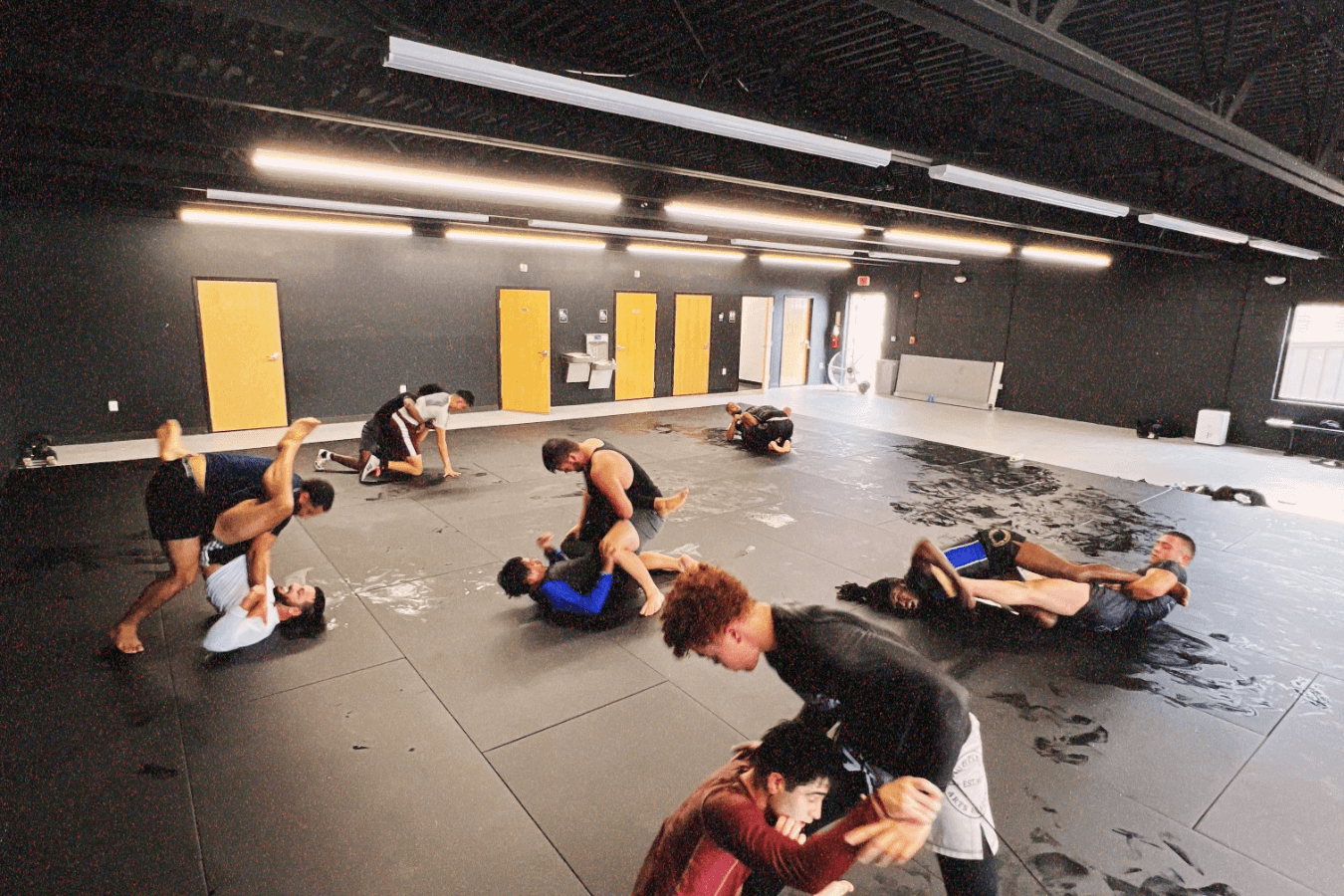
Grappling turns fitness into a skill you can feel improving week after week, whether you are 7 or 70.
If you have ever tried to get in shape and felt bored halfway through a routine, Grappling can feel like the missing piece. You are not just counting reps, you are learning timing, balance, and how to stay calm when things get fast. In our Bridgeport training space, we see people show up for fitness and stay because the learning never really stops.
We also see something else that surprises new students: focus improves along with conditioning. When you practice position, pressure, and control, your attention has to stay right here, right now. That mindset carries into work, school, and everyday stress in a way that is hard to explain until you feel it.
This guide breaks down how our programs support all ages, how we structure training safely, and what you can expect from submission grappling in Bridgeport when your goal is fitness, confidence, and sharper concentration.
What Grappling Really Is and Why It Works
Grappling is a close range combat sport focused on controlling an opponent through positioning, leverage, and technique. Instead of relying on strikes, you learn how to move your body efficiently, maintain balance, and solve problems under pressure. That problem solving element is a big reason so many people find it mentally refreshing.
From a fitness standpoint, Grappling is full body work. Your legs drive base and movement, your core stabilizes and rotates, and your upper body connects everything through grips, frames, and pressure. You train strength and endurance, but also coordination and mobility, which is why it can work for a wide range of ages.
One thing we emphasize early is that intensity is adjustable. You can train with purpose without training reckless. Our classes build skills step by step so you can progress without feeling like you have to survive a workout just to belong.
Bridgeport Training That Fits Real Life
Most people do not have unlimited time or unlimited energy. You might be juggling school pickup, a long commute, or a job that drains you before you even lace up your shoes. Our approach is built around consistency, because that is what actually changes your fitness and your focus.
We keep classes structured so you know what you are doing and why you are doing it. That structure matters for beginners, but it also matters for experienced students who want measurable progress instead of random drills. Over time, the class rhythm becomes familiar in a good way, like walking into a space where you can finally put your phone down and pay attention.
And yes, the community element helps. Training partners become the reason you show up on the days you feel a little tired. Not pressured, just supported.
Grappling for Kids: Confidence, Coordination, and Better Listening
Kids often have energy to spare, but not always direction. Grappling gives that energy somewhere to go while teaching control and awareness. In our youth training, we focus on fundamentals that build athletic ability and respectful habits at the same time.
A typical kids class blends movement skills with simple, repeatable techniques. We teach how to fall safely, how to keep balance, and how to work with a partner without panicking. Those are life skills, honestly, even outside the gym.
We also pay attention to how kids learn. Short explanations, lots of guided practice, and clear expectations work better than long lectures. When kids know the goal, they settle in and surprise you with how focused they can be.
Skills kids build through consistent training
- Body awareness and coordination through controlled movement and partner drills
- Confidence from learning positions and escapes that actually work with good technique
- Respect and self control by practicing safely and following coaching cues
- Focus and listening because details matter and feedback is immediate
- Healthy routines that feel fun instead of forced, which is the real win
Teens: A Strong Outlet That Sharpens Decision Making
Teen years are busy and sometimes messy. Grappling gives teens a place to work hard, reset their nervous system, and build real competence. Because training is physical and technical, teens learn that effort and patience matter more than quick talent.
We also like what Grappling teaches about decision making. In a scramble, you cannot do ten things at once. You learn to pick a good option, commit, and adjust. That kind of thinking carries into sports, academics, and even social situations where confidence can wobble.
For teens who already play sports, grappling often improves balance, grip strength, and conditioning. For teens who do not feel at home in traditional team sports, it can be the first athletic space that makes sense, since progress is personal and measurable.
Adults: Fitness You Can Measure and Focus You Can Trust
Adult submission grappling in Bridgeport attracts people with all kinds of goals, but a few show up again and again: lose weight, get stronger, build confidence, and find a stress outlet that actually works. We build classes to support those goals without turning training into a beatdown.
We coach technique first because technique keeps you safer and helps you last longer. If you have ever tried to go hard on day one and then disappeared for three months, you already know why this matters. Sustainable training changes your body more than occasional intensity.
We also see adults become sharper mentally. Grappling forces you to slow down internally, even when your heart rate is up. You learn to breathe, frame, move with purpose, and not waste energy. That becomes a form of focus training, not just a workout.
What adult students notice after a few months
- Better cardio and recovery, because rounds teach pacing and breathing under pressure
- Stronger core and posture from learning to base, bridge, shrimp, and stabilize
- Reduced stress, since training demands presence and gives your mind a break
- More confidence in close contact situations because you understand control and escapes
- Real progress you can track, like cleaner technique, longer rounds, and calmer reactions
Safety and Progression: How We Keep Training Sustainable
Safety is not an afterthought for us, it is part of the skill. We teach tapping early and we reinforce controlled training. The goal is to train tomorrow, not just today.
We also use progression so you are not overloaded. You learn foundational positions, then basic transitions, then submissions in context. That context matters, because a technique without setup is just a trick. When you understand how positions connect, you feel less overwhelmed and more in control.
If you are concerned about injuries, that is normal. We recommend starting at a pace that lets you focus on clean movement and clear breathing. Intensity can increase later, and it usually does naturally once your body adapts and your confidence grows.
What a Typical Class Feels Like (So You Can Walk In Calm)
People sometimes avoid trying submission grappling in Bridgeport because they do not know what will happen in class. We keep the experience predictable while still challenging.
Most classes include a warmup that prepares your joints and gets you moving in grappling specific ways. Then we teach a technique with details that matter, like where your hips go or how your hands frame. After that, you drill with a partner so the movement becomes familiar. Many classes include controlled sparring, scaled to your level, so you can apply skills in real time.
You will sweat. You will also think. That mix is what makes Grappling different from a standard workout class.
Getting Started Without Overthinking It
Starting is simpler than people make it. You do not need to be in shape first, because training is how you get in shape. You do not need to memorize a hundred moves, because we teach progressively. You just need a willingness to learn and a little patience with yourself.
Here is the path we recommend for new students:
1. Check the class schedule so you can pick a time you can realistically repeat each week
2. Arrive a bit early so we can help you settle in, meet the coach, and understand the flow
3. Focus on survival basics first, like posture, frames, and how to tap quickly and clearly
4. Ask questions after class, because small clarifications save weeks of confusion
5. Track consistency, not perfection, since progress in Grappling comes from showing up
Membership Options and Training Rhythm That Works
Most students do best with a steady weekly rhythm. We encourage you to choose a membership option that supports consistency rather than bursts of motivation. Training once a week can help, twice a week builds momentum, and three times a week often creates noticeable changes in conditioning and focus.
We keep the experience welcoming for beginners while also giving more experienced students technical depth. As you train, you will start to notice the small wins: cleaner escapes, better balance, calmer breathing, and more confidence in close range positions.
If you are specifically looking for adult submission grappling in Bridgeport, we structure training so you can build skill safely while still getting a serious workout. You will feel worked, but you should also feel smarter every week.
Take the Next Step
Building strength, focus, and confidence does not have to mean grinding through workouts you hate. When training is skill based, you get the satisfaction of learning while your fitness improves as a side effect, and it is a pretty great side effect. That is what we aim for every day in our classes, whether you are brand new or returning with experience.
If you are ready to experience submission grappling in Bridgeport with a clear progression and a supportive training environment, we would love to help you start strong and stay consistent at Connecticut Submission Grappling.
Build resilience and mental toughness by joining a grappling class at Connecticut Submission Grappling.