
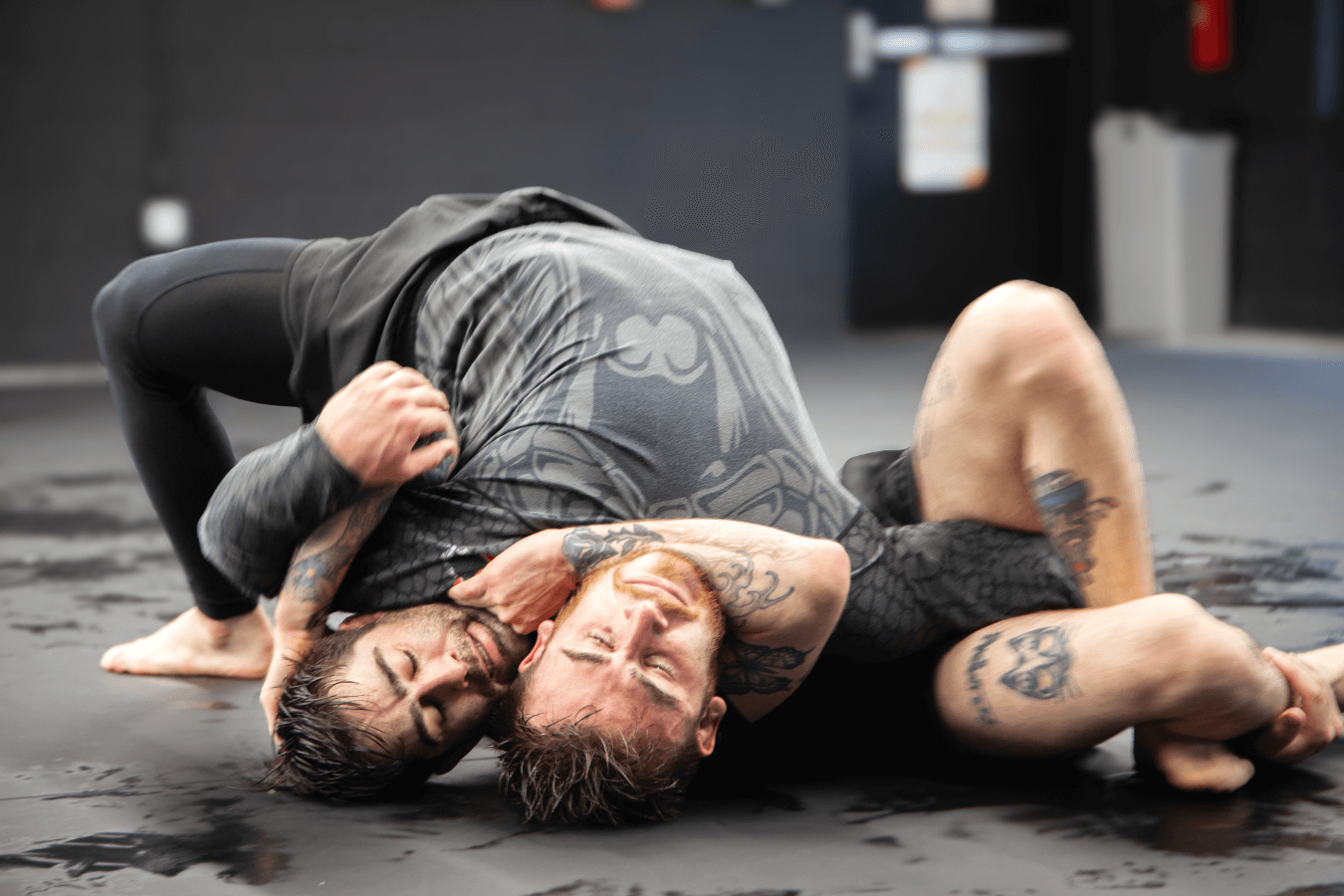
Grappling trains your whole body at once, building real-world strength and cardio in a way treadmills and dumbbells rarely match.
If you have ever wanted a workout that feels practical and athletic instead of repetitive, Grappling belongs on your radar. The reason is simple: in a single class, you are pushing, pulling, bracing, rotating, and moving your body through constantly changing positions. Your heart rate climbs, your muscles burn, and you finish feeling like you actually did something.
In Bridgeport, we also see a common pattern: people want fitness results, but they do not want to beat up their joints or spend hours doing isolated exercises that do not translate to everyday life. Grappling checks a lot of boxes at once. It is challenging, but it is also scalable, meaning you can train hard while still learning control and staying safe.
This article breaks down why Grappling is such a complete workout, what your body is really doing during training, and what you can expect as you progress, especially if you are looking for adult submission grappling in Bridgeport.
Why Grappling feels like a full-body workout (because it is)
A “full-body workout” is not just about using many muscles. It is about forcing your body to coordinate strength, endurance, balance, and breathing under pressure. Grappling does that naturally, because the whole point is controlling distance, posture, and position while resisting an opponent who is trying to do the same thing.
Unlike many gym routines, you are not training one movement pattern at a time. You might be bridging and turning to escape, then posting and standing, then controlling someone’s hips, then stabilizing your core while you shift your weight to finish a hold. You end up training your body as one connected system, which is how your body actually moves in real life.
Cardio that shows up without “doing cardio”
A lot of people are surprised by how much Grappling taxes the lungs. The stop-and-go pace, the bursts of effort, and the constant tension create a cardio demand that feels different than running. Research on Brazilian Jiu-Jitsu athletes shows VO2max levels around 42 to 52 mL/kg/min, which is comparable to many endurance athletes, and it helps explain why grappling conditioning is very real.
Calories burned varies by body size, pace, and how hard you roll, but estimates commonly land in the range of 300 to 800 calories per session. The important thing is that you are not just “burning calories.” You are building work capacity, meaning you can do more, recover faster, and repeat efforts with less fatigue over time.
Strength endurance: the hidden superpower
Max strength matters, but Grappling rewards strength you can keep using. You are often holding frames, controlling grips, maintaining pressure, or staying tight through transitions. That is strength endurance: the ability to keep producing force for longer stretches.
This is why people often feel their forearms, upper back, and core light up early on. You are learning to use the right muscles at the right time, then learning to relax when you can, which is honestly a skill all by itself.
The muscles and movement patterns Grappling trains
It is tempting to think of Grappling as “arms and shoulders,” because that is what most beginners feel first. But the work spreads across your whole body once you understand what is happening.
Lower body power and hip control
Your hips are the engine. Escapes, sweeps, takedowns, and positional control all depend on hip movement, posting, and driving through the legs. You will train:
• Glutes and hamstrings for bridging, lifting, and driving pressure
• Quads and calves for standing balance, shots, and getting up safely
• Hip flexors and adductors for leg positioning, retention, and control
Over time, many students notice better stability on stairs, better balance on uneven ground, and fewer “wobbly” moments when they move quickly.
Core strength that is not just crunches
In Grappling, your core is constantly working to transfer force between your upper and lower body. You brace when someone pressures into you. You rotate when you change angles. You stabilize when you post and base out. This is why people often feel both strong and tired through the torso after class, even if we never do a single sit-up.
Upper body pulling and posture control
Your back, shoulders, and arms do plenty of work, especially when you are learning grips and posture control. But we emphasize smart mechanics, not just muscling through positions. When technique improves, you will often notice you can “do more with less,” which is exactly what we want.
What makes Grappling different from lifting or typical fitness classes
A big reason Grappling feels so effective is that you are training against a live, changing problem. The resistance is not a fixed weight or a predictable machine. It is a person reacting in real time.
That has a few major benefits:
• Your body learns to generate force from awkward angles, not just perfect gym positions
• Your balance improves because you are constantly adjusting your base
• Your coordination improves because you have to link movements together under pressure
• Your recovery improves because rounds teach you to manage effort and breathing
It is functional training in the truest sense, but it is also technical, so your brain is just as engaged as your muscles.
The mental benefits: stress relief, focus, and confidence
We talk about fitness, but Grappling also changes how you feel day to day. Many practitioners report reduced anxiety from training, and that makes sense when you consider what is happening: you are learning to stay calm in uncomfortable situations, solve problems quickly, and recover after setbacks.
There is also a kind of mental “reset” that happens when you train. For an hour, you are present. You are thinking about posture, frames, timing, and breathing. Work stuff and phone stuff tends to fade out, not because you are forcing mindfulness, but because you genuinely need to focus.
Confidence grows in a grounded way, too. It is not hype. It comes from doing hard things repeatedly and realizing you can handle pressure, adapt, and keep improving.
What to expect in your first weeks of submission grappling in Bridgeport
Starting something new can feel intimidating, especially when it involves close-contact sport. We keep the learning curve realistic and the environment structured, so you can build skill without feeling like you are being thrown into chaos.
In the first few weeks, most adults experience two things at the same time: rapid improvement in understanding and very honest fatigue. That is normal. Your body is learning new patterns, and your nervous system is adjusting to effort, contact, and timing.
A typical class experience
While class formats can vary, most sessions include a clear technical focus, drilling to build muscle memory, and controlled sparring (often called rolling) where you apply the skill. We coach you through pacing, how to tap early, and how to train with good partners so you can keep showing up consistently.
Consistency is the real secret. You do not need to be in perfect shape before you start. You get in shape by training, and we scale intensity to match your current level.
How we keep Grappling safe while still challenging
The best training is training you can do for months and years, not just for a few intense weeks. Safety in Grappling is not about removing difficulty. It is about building the right habits and expectations.
We prioritize:
• Clear tapping etiquette and quick resets so you can train without fear of “going too far”
• Progressive intensity, especially for beginners who are still learning body awareness
• Technique-first coaching so you are not relying on strength alone
• Partner selection and supervision to keep rounds productive and controlled
• Mobility and positioning awareness to reduce strain on neck, shoulders, and knees
You will still work hard. You will still sweat. But the goal is sustainable training that keeps you improving.
Why adult submission grappling in Bridgeport works so well for busy schedules
Most adults are juggling work, family, and everything else that fills a calendar fast. Grappling training fits because each class delivers a lot of value in a short time: strength, cardio, mobility, skill-building, and stress relief in one session.
It also helps that progress is measurable. You feel your conditioning improve. You notice you recover faster between rounds. You start recognizing positions and making better decisions. Even if your week is hectic, a couple of focused classes can keep you moving forward.
If you have been searching for adult submission grappling in Bridgeport, our approach is built to meet you where you are now, not where you think you “should” be.
The performance qualities we build on purpose
To make Grappling feel smoother and more effective, we focus on a few qualities that show up again and again on the mat.
1. Strength endurance so you can maintain posture, frames, and control without gassing out
2. Aerobic conditioning so you can recover between exchanges and think clearly under fatigue
3. Mobility with end-range strength so your joints can move safely through real positions
4. Technical efficiency so you waste less energy and create more predictable results
5. Composure under pressure so your breathing and decision-making stay steady
These qualities are not reserved for elite competitors. They are exactly what makes everyday training feel better, safer, and more rewarding.
Who benefits most from Grappling as a workout
Grappling is a strong fit for people who want more than a standard fitness routine. We often work with adults who want to lose weight, build practical strength, and feel more capable in their bodies. We also see plenty of students who are already active but want a new challenge that is skill-based, not just intensity-based.
This training can be especially helpful if you want:
• A full-body workout that improves coordination and balance
• A cardio challenge that does not require long, repetitive sessions
• A strength routine that feels athletic and usable
• A community-based environment that keeps you consistent
• A skill you can keep developing for years without getting bored
The best part is that Grappling meets you at your level. The mat does not care where you started. It rewards steady effort.
Take the Next Step
If you want a workout that builds strength, cardio, mobility, and mental toughness in one place, Grappling is hard to beat. When you train consistently, you will feel the difference in how you move, how you breathe under effort, and how quickly your body adapts to challenges.
That is exactly what we focus on every day at Connecticut Submission Grappling. If you are interested in submission grappling in Bridgeport and want a clear path from beginner fundamentals to confident live training, we are ready to help you start strong and keep progressing.
If you’re curious about submission grappling training, join a class at Connecticut Submission Grappling and learn step by step.