
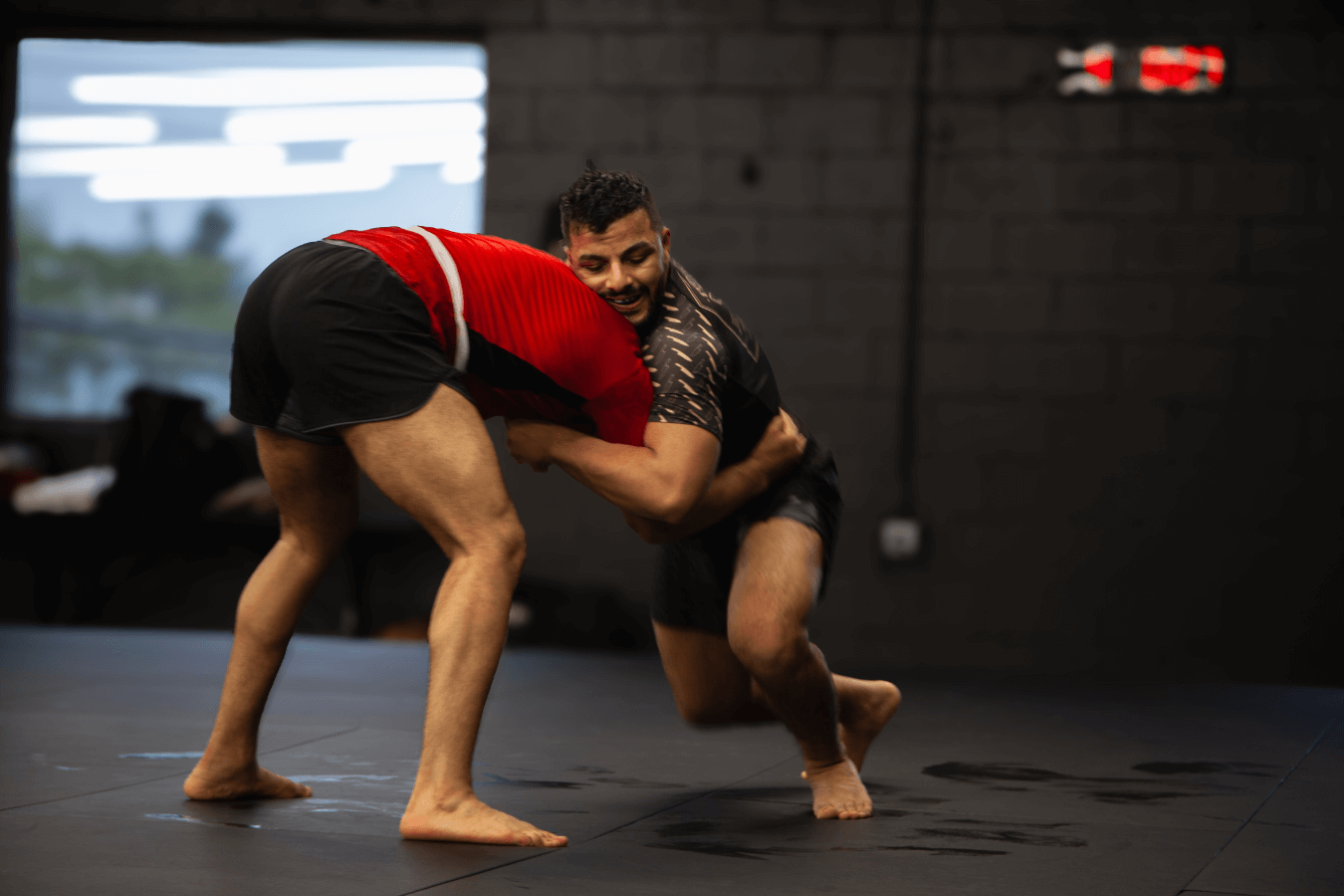
Grappling turns conditioning into a skill you can feel improving week after week, not just miles you grind out.
If your idea of “cardio” has always been running, biking, or staring at a timer on a machine, Grappling can feel like a completely different world. We see it all the time in Bridgeport: people want better endurance and a healthier heart, but they also want training that stays interesting enough to stick with. Grappling checks both boxes.
What surprises most beginners is how quickly your breathing and recovery change when you train with real resistance. You are not just moving through space, you are solving problems with another person who is also trying to solve problems. That pushes your heart rate up, forces you to control your pace, and teaches you how to recover under pressure.
In our room, we approach conditioning as something that grows out of good technique and smart effort. You will sweat, you will breathe hard, and you will build stamina, but you will also learn how to conserve energy, how to relax when it matters, and how to keep working when your lungs want a break.
What Makes Grappling Different From Traditional Cardio
Most “cardio workouts” are predictable. You set a pace, you hold it, and you finish. That can work, but it often misses the stop and go reality of how the body actually performs in high effort moments. Grappling is naturally intermittent, more like high-intensity interval training: bursts of explosive movement, followed by brief windows where you settle, adjust, and keep moving.
That matters because your body adapts to what you ask it to do. Grappling asks for both aerobic endurance (keeping a steady output over time) and anaerobic power (short, intense efforts like bridging, scrambling, and fighting grips). That mix can elevate heart rate, improve circulation, and build lung capacity in a way that feels functional, not theoretical.
A practical example we see in class: you might spend 20 seconds defending a tight position with everything you have, then you have to keep thinking and moving for the next few minutes without “checking out.” That teaches your body to clear fatigue and keep performing. Over time, your recovery between hard efforts improves, and that is a huge part of real endurance.
The Cardio Science Behind Submission Grappling in Bridgeport
When we talk about cardio, we are really talking about how efficiently your body moves oxygen and uses it. One measurement you will hear in sports science is VO2 max, basically how well your body can take in and use oxygen during hard effort. Grapplers tend to develop strong VO2 max and high anaerobic capacity because training repeatedly pushes both energy systems.
You can feel those adaptations show up in everyday ways. Stairs stop feeling like a personal insult. Long workdays feel more manageable. Your resting heart rate often starts to drop as your cardiovascular system becomes more efficient. And because Grappling blends constant movement with moments of squeezing, bracing, and posting, you also build muscular endurance in the core, back, and legs that supports better posture and breathing.
Another underrated piece is blood flow. Training that raises your heart rate in controlled, repeatable sessions supports circulation and can help with blood pressure and overall cardiovascular health. We keep classes structured so you can work hard without turning every round into a reckless sprint.
Why Grappling Builds Endurance Without Beating Up Your Joints
For a lot of adults, “more cardio” sounds great until the knees, hips, or back get a vote. One reason people stick with Grappling is that it can be intense without being high-impact. We are not doing repetitive pounding like long-distance running on concrete. Most of the work happens through controlled contact, leverage, and positioning.
That does not mean it is effortless. You will absolutely work. But we can scale intensity in smart ways: shorter rounds, longer rests, positional sparring, and technique-focused sessions where you still move a lot without redlining.
If you are newer or returning after time off, we emphasize fundamentals and pacing. Your endurance improves faster when you are not constantly injured or forced to take long breaks. Consistency wins, and Grappling rewards consistency.
How Our Classes Train Both “Go Hard” and “Go Long”
A common misconception is that endurance training must be slow and boring. In reality, well-rounded endurance includes the ability to sustain a moderate pace and the ability to spike intensity and recover. Grappling develops both, especially when training is organized with intention.
We typically blend two conditioning modes inside normal training:
Zone 2 style movement for a strong aerobic base
Zone 2 is a comfortable but steady effort where you can breathe through your nose part of the time and still talk in short sentences. In Grappling, this can look like longer, lighter rounds where you focus on clean technique, continuous movement, and staying relaxed. It builds the engine that helps you recover between harder bursts.
HIIT-like bursts that mimic real exchanges
Hard scrambles, tight pin escapes, and aggressive guard passing create those 85 to 95 percent effort spikes. This is where you build the ability to work while flooded with fatigue and still make good choices. The goal is not to “win the round at all costs.” The goal is to build repeatable output and controlled aggression.
When you train both modes, your endurance becomes more usable. You are not just “fit,” you are fit in a way that shows up when you are tired, when you are pressured, and when you have to keep moving anyway.
What Cardio Progress Looks Like for Adult Submission Grappling in Bridgeport
In adult submission grappling in Bridgeport, progress is often obvious in ways people do not expect. Yes, you will notice you sweat less for the same work and you recover faster between rounds. But you also start making fewer panic decisions, which is a cardio improvement in disguise.
When beginners first start, tension is expensive. Holding your breath, squeezing everything, and muscling positions burns energy fast. As you learn how to frame, angle, and use leverage, your effort gets cleaner. You still work hard, but you stop wasting energy. That is endurance.
Here are a few real-world signs you are improving:
- You can roll multiple rounds and keep your breathing under control, even after a tough exchange.
- You recover faster during short breaks, and your heart rate drops more quickly.
- You can keep good posture and decision-making late in class, not just early.
- You feel less “heavy” walking out the door, even if you trained hard.
- You start lasting longer in uncomfortable positions without gassing out.
If you like tracking numbers, you can monitor resting heart rate, how many rounds you can do at a steady pace, and how quickly you can breathe normally after a hard round.
A Simple 3-Day Starter Routine We Like for Endurance
If your main goal is better cardio, we recommend a simple structure that keeps you improving without frying you. You can do this with 2 to 4 sessions per week, but here is a realistic three-day pattern many adults can maintain.
1. Day 1: Technique plus steady rounds
Focus on fundamentals, then finish with longer, lighter rolls where you prioritize continuous movement and relaxed breathing.
2. Day 2: Technique plus higher intensity rounds
After drilling, add shorter rounds with purposeful intensity, then take enough rest to keep your output honest.
3. Day 3: Positional training and controlled pacing
Start from specific positions, work escapes and controls, and keep the pace challenging but not chaotic.
This is not fancy, but it works. And it keeps your week balanced: you build the aerobic base, you develop the ability to handle intensity, and you reinforce skill so your cardio is supported by efficiency.
Weight Control and Metabolic Benefits You Can Actually Sustain
Grappling burns calories, but the bigger benefit for many adults is that it changes how you relate to effort. You are not just “doing cardio,” you are learning. That learning loop keeps people coming back, which is the real key to weight control and long-term health.
Because Grappling uses the whole body, you build muscle endurance and strength along with conditioning. That combination tends to support healthier body composition over time. You also get a workout that includes pulling, pushing, bracing, rotating, and hip movement, all while reacting to resistance.
In Bridgeport, many of our students juggle demanding schedules. A training session that improves cardio, strength, mobility, and stress levels at once is simply easier to fit into real life than trying to piece together five different workouts.
Stress, Focus, and the “Mental Endurance” Side of Grappling
Cardio is not just a physical trait. It is also your ability to stay calm while your heart rate is up. Submission grappling in Bridgeport is a powerful way to train that skill because you are constantly making choices under pressure.
You learn how to breathe when you are stuck, how to create space instead of panicking, and how to reset after a mistake. That kind of composure carries over. People often tell us they feel more focused at work, more patient in traffic, and less rattled by the little stuff.
There is also emerging discussion around brain health and the role of sustained blood flow and complex motor learning. While we never oversell it, it makes sense that a practice combining coordination, strategy, and physical exertion can support long-term cognitive resilience. At the very least, you will sharpen your ability to think while tired, which is a useful life skill.
Safety, Scaling, and Why Beginners Can Build Cardio Fast
A fair question is whether Grappling is safe if you are brand new or a bit older. Our answer is that it can be very safe when training is structured and you are coached to scale intensity. We start beginners with clear rules, controlled drilling, and partners who understand the goal is development, not ego.
We also teach you how to tap early and communicate. That sounds simple, but it is a major part of staying healthy. Endurance comes from showing up week after week, not from one heroic session that leaves you sidelined.
If you are worried about your current fitness level, that is exactly why Grappling is valuable. You do not need to “get in shape first.” We build your conditioning inside the skill, and we adjust the pace so you can progress without feeling crushed.
Take the Next Step
If you want cardio that feels alive, measurable, and surprisingly addictive, we built our training around that exact outcome. At Connecticut Submission Grappling, our goal is to help you develop real endurance through smart coaching, progressive rounds, and a class environment where you can work hard while still training safely.
Whether you are aiming for better heart health, sustainable weight control, or the kind of stamina that shows up in daily life, our approach to adult submission grappling in Bridgeport gives you a clear path forward. Check the website, pick a time on the class schedule, and come in ready to move.
Challenge yourself and grow on the mats at Connecticut Submission Grappling.