
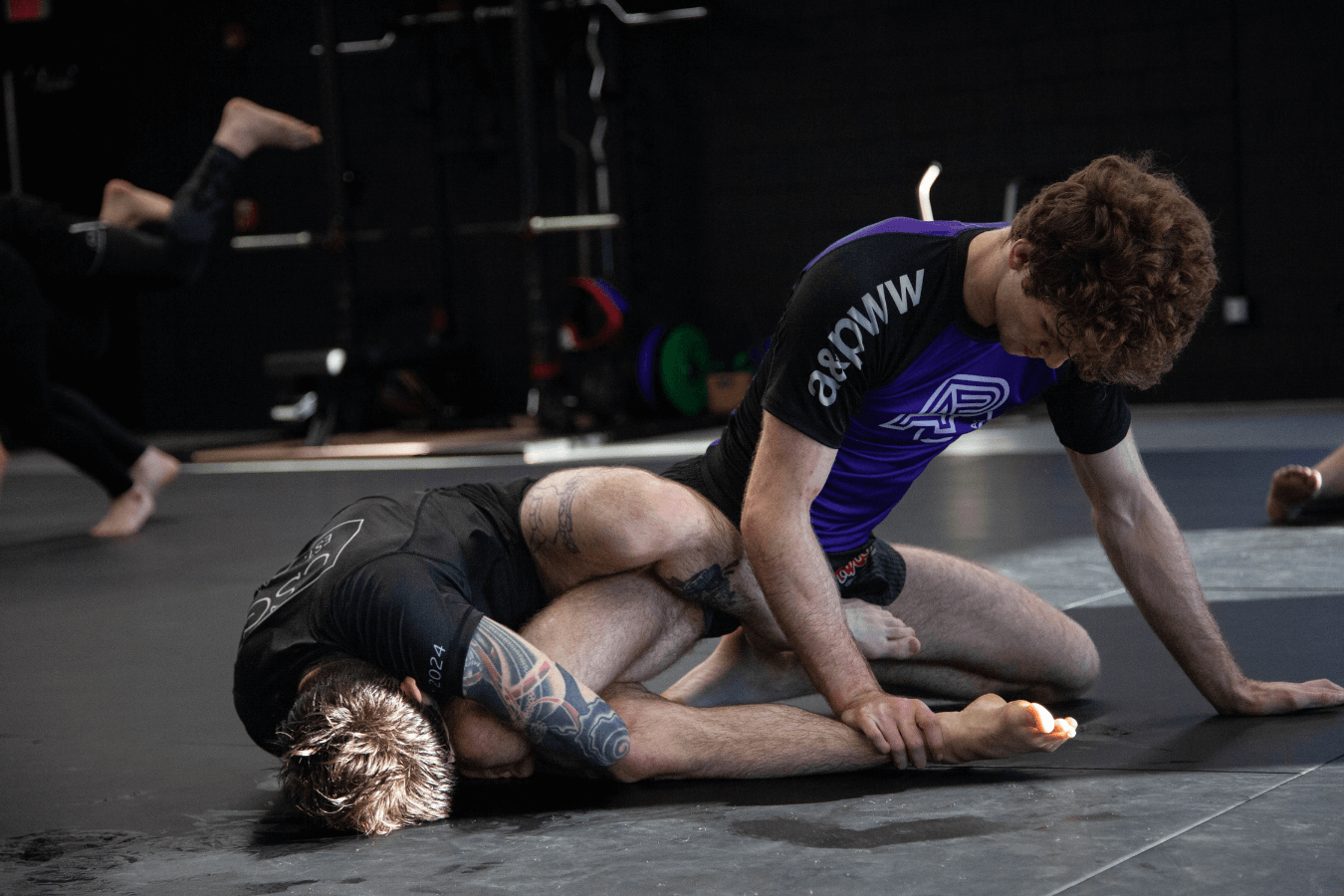
Grappling turns “working out” into a shared skill your whole family can grow into together.
Families in Bridgeport are busy, and fitness is often the first thing to slide when schedules get tight. We see it all the time: adults want better conditioning, kids need a positive outlet, and everyone wants something that feels worth showing up for week after week. Grappling fits that reality because it’s not just exercise, it’s learning a practical, technical sport where progress is obvious and motivating.
What makes Grappling especially effective for family fitness is that it meets you where you are. You can come in as a total beginner, train safely, and build real athletic ability without needing to be “in shape first.” Our classes are structured so you can learn the fundamentals, get a solid workout, and leave feeling like you used your time well, not like you just wandered around a gym guessing.
In this guide, we’ll break down why Grappling works so well for families, how training supports different ages and goals, and what you can expect when you look at the class schedule and start planning a routine that actually sticks.
Why Grappling Works as Real Family Fitness
A lot of family fitness ideas sound good until you try to make them consistent. Grappling has an advantage: it’s engaging. There’s always a problem to solve, a position to improve, and a new detail to focus on. That mental “hook” matters because it keeps both adults and kids coming back.
It’s also scalable. In Grappling, intensity is adjustable without removing the challenge. Beginners can work slow and technical, while more experienced students can train with higher pace and more resistance. That means family members don’t need identical fitness levels to train at the same gym and still feel appropriately challenged.
And yes, you sweat. Even when you’re training carefully, Grappling uses your full body. You’re pushing, pulling, balancing, framing, bridging, rotating, and stabilizing. It’s strength and cardio, but it doesn’t feel like counting reps. It feels like learning.
A Full Body Workout Without the Usual Boredom
Traditional workouts can feel repetitive, especially for kids and for adults who have already tried the “start Monday, quit Friday” cycle. Grappling stays fresh because every round is different. Even when we repeat the same techniques, your partner’s movement changes the puzzle.
From a fitness standpoint, Grappling training tends to build:
• Functional strength in your legs, hips, back, and grip
• Muscular endurance from sustained effort and isometric holds
• Cardiovascular conditioning through intervals of work and recovery
• Mobility and body control through awkward angles and transitions
We also like that progress is measurable in a way that feels personal. Maybe you move smoother from guard to standing. Maybe you stop getting flattened in side control. Maybe your breathing stays calmer during live rounds. Those are fitness wins that show up inside training and outside it too, like carrying groceries, climbing stairs, or just feeling less stiff.
Skills Your Family Can Share, Not Just a Workout You Tolerate
A big reason submission grappling in Bridgeport works for families is that it creates shared language. You can talk about what you learned on the drive home. You can compare notes about a sweep or an escape. It becomes a family activity without needing everyone to have the same interests or personality.
We keep the focus on technique first. That matters for family training because skill development is the equalizer. A smaller person can learn to use leverage. A newer student can learn to survive and escape. A parent doesn’t have to “win” to get value. Your win might be staying composed, protecting your neck, and using the right frame at the right time.
And there’s a quiet bonus: training together builds mutual respect. When everyone understands how hard it is to learn, to stay patient, and to keep showing up, it changes the tone at home in a good way.
Safety, Control, and Smart Progression for All Ages
When families ask us about safety, we appreciate it, because it shows you’re thinking long term. Our approach emphasizes controlled training, clear rules, and progressive intensity. Grappling can be intense, but it doesn’t have to be reckless. In fact, the better your technique gets, the safer training tends to feel because you’re not flailing.
We teach you how to tap, when to tap, and how to protect your training partners. That culture matters. It’s what allows beginners, teens, and adults to train in the same space with confidence.
How We Keep Training Structured and Safe
We build classes around fundamentals and repeatable mechanics. You’ll see the same core positions and ideas come up again and again: posture, base, pressure, frames, angles, and escapes. Repetition is not boring here, it’s what makes you better.
We also manage intensity. Not every round is a battle. Some rounds are technical. Some are positional. Some are focused on one goal, like escaping mount or finishing a specific submission with control. That structure is especially helpful for families because it reduces the chance of a brand-new student jumping into the deep end too fast.
Why Grappling Builds Confidence Without Needing Hype
Confidence is a word people throw around, but Grappling builds it in a practical way. You get used to discomfort. You learn to breathe, think, and problem-solve while you’re under pressure, literally. That transfers to everyday life, like staying calm in stressful conversations or keeping your head clear when plans change.
For kids and teens, the confidence often shows up as better posture, better focus, and a more grounded sense of boundaries. For adults, it’s often a mix of stress relief and self-trust. You start to feel capable again, which is surprisingly powerful.
And it’s not about being aggressive. Our best students are usually the ones who stay curious, stay consistent, and treat training like a craft.
The Family Routine That Actually Works in Bridgeport
Consistency is where the magic happens, and it’s also where families struggle. Between school, work, commutes, and dinner, a complicated routine falls apart fast. We encourage you to start simple and build.
Here’s a practical approach we see succeed:
1. Choose two training days per week that are realistic with your current schedule.
2. Use the class schedule page to pick specific class times, not vague “we’ll go sometime.”
3. Commit to four weeks before you judge results, because the first week is mostly learning the rhythm.
4. Add a third day only after two days feels normal, not exhausting.
5. Keep one day for rest and recovery, especially when you’re new.
That structure sounds basic, but it’s the difference between a short burst of motivation and a steady habit your family can maintain.
What You Can Expect in Your First Few Classes
Your first class should feel welcoming and clear, not confusing. We start with fundamentals, and we explain what you’re doing and why. You’ll drill techniques with a partner in a controlled way, and you’ll get coaching that’s specific, not generic.
It’s normal to feel a little awkward early on. Grappling uses movements most people haven’t practiced before. You might mix up left and right. You might forget a step. That’s fine. You’re learning a physical language, and it clicks faster than you think when you train consistently.
As the weeks go on, you’ll notice small upgrades: better balance, smoother movement, stronger grips, better cardio. You’ll also start recognizing positions, which makes everything feel less chaotic.
Adult Training: Fitness, Stress Relief, and Real Skill
When people search for adult submission grappling in Bridgeport, the goal is often twofold: get in shape and learn something real. Adults want training that respects their time. We keep classes purposeful so you feel like every session builds on the last.
Grappling is also an underrated stress outlet. It forces you to be present. You can’t multitask while someone is trying to pass your guard. For many adults, that mental reset is as valuable as the workout itself.
You’ll also find that training pairs well with normal life. You don’t need perfect sleep or perfect nutrition to start. Of course those help, but Grappling can be the anchor habit that improves everything else.
A Note on Getting Stronger for Grappling
You’ll get stronger just by training, especially as a beginner. Over time, many adults choose to add simple strength work or mobility work outside class. We’re fans of keeping that simple: a few basic lifts, some joint-friendly mobility, and enough recovery to keep training consistently. The best plan is the one you can actually do.
Kids and Teens: Energy, Focus, and Healthy Confidence
Families often tell us they want their kids to be active, but they also want an environment with discipline and positive expectations. Grappling gives kids a place to move, learn boundaries, and practice listening under pressure, in a good way.
Training also teaches patience. Techniques take time. Kids learn that effort matters more than instant results. That lesson shows up in school, sports, and home routines.
We also keep the emphasis on respect and control. Kids learn quickly that partners are not opponents to “beat.” Partners are how you learn. That mindset is a big part of why families feel comfortable making this a long-term activity.
Why Family Grappling Helps Everyone Stay Accountable
Accountability is easier when it’s shared. When you train as a family, it’s not just one person trying to stay motivated alone. You remind each other. You coordinate rides. You compare progress. And on days when someone feels tired, someone else usually has enough momentum to keep the plan intact.
We also see something else: families communicate better when they share a challenging hobby. Grappling is humbling in the best way. It teaches you to accept feedback, try again, and laugh off small mistakes. That attitude tends to lower tension at home over time.
The Small Details That Make Training Feel Welcoming
A family-friendly gym experience is not only about who’s on the mat. It’s the vibe in the room. It’s whether beginners feel ignored or guided. It’s whether the class has a plan. We care about those details because they’re what make you want to return.
You should expect:
• Clear instruction with time for questions
• Structured drilling before higher-intensity training
• Training partners who understand control and safety
• Coaching that helps you improve one step at a time
• A class environment where new students feel included
That’s how Grappling becomes a long-term practice instead of a short-lived experiment.
Take the Next Step
If you want a family fitness routine that builds strength, cardio, coordination, and real skill, Grappling is hard to beat. It scales across ages, it keeps training interesting, and it creates a shared experience that makes consistency easier. Our goal is to help you build a sustainable rhythm, feel confident on the mats, and enjoy the process, even when it’s challenging.
You can start where you are and grow into it, and that’s exactly how we’ve designed training at Connecticut Submission Grappling in Bridgeport: practical coaching, a supportive room, and a class structure that helps families stick with it.
Turn what you learned here into live training by joining a grappling class at Connecticut Submission Grappling.