
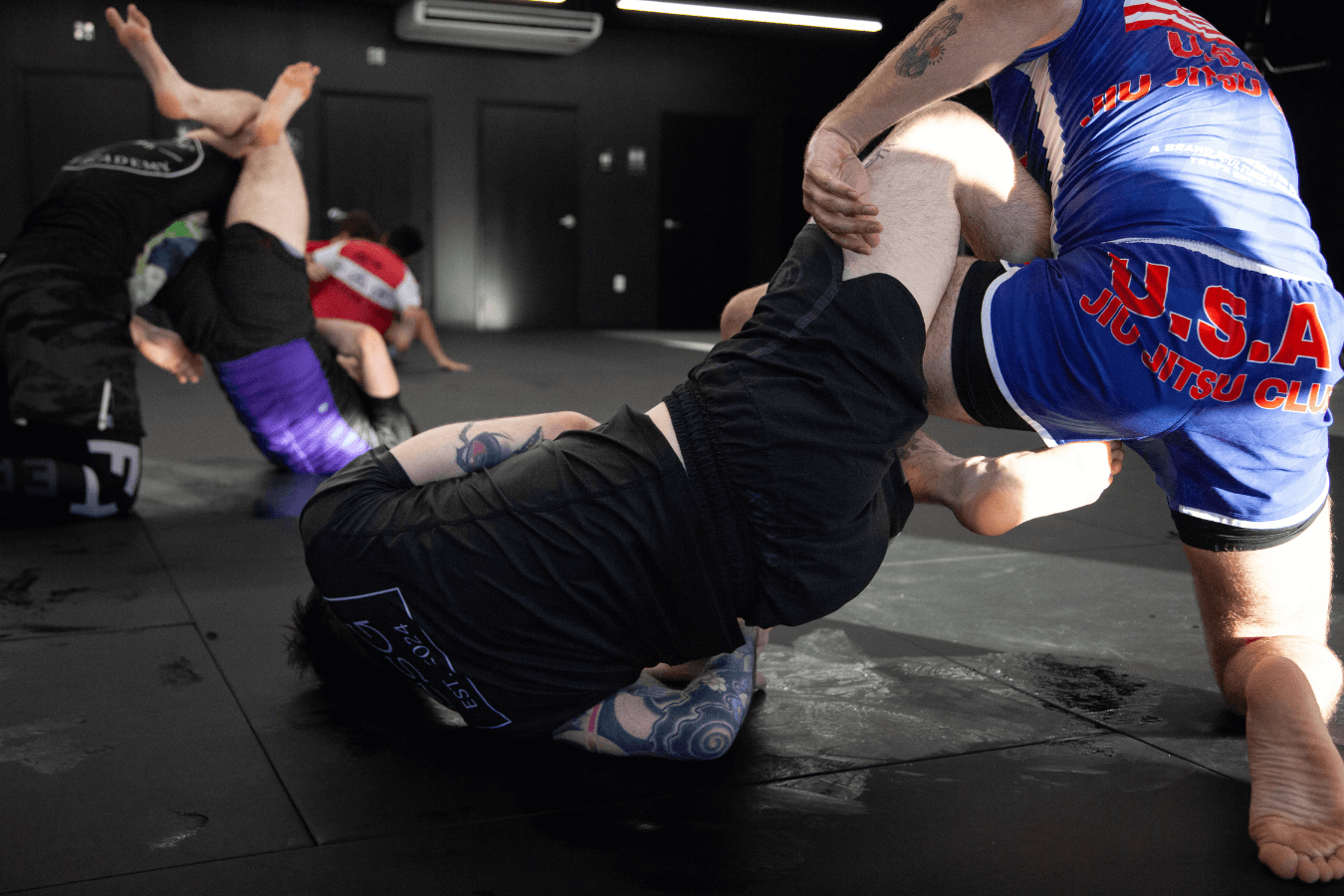
The fastest way to improve is simple: train live, learn positions, and get comfortable solving problems under pressure.
If you are new to Grappling, it can feel like there are a thousand techniques to learn and no clear starting line. We get it. But the truth is, most real progress comes from a smaller set of fundamentals practiced with real resistance, not from memorizing a long list of moves.
In Bridgeport, the best results usually come from training that looks like the real thing: tight positional control, steady pace, and partners who make you earn every inch. When we build your foundation that way, your cardio improves, your confidence grows, and techniques stop feeling like random steps and start feeling like decisions you can make on the fly.
This guide breaks down the essentials we focus on so you can train smarter, stay safer, and actually feel the difference from week to week.
What “fundamentals” really means in Grappling
Fundamentals are not “basic moves” you outgrow. Fundamentals are the skills that keep working as your partners get better and faster. In practical terms, that means posture, base, frames, inside position, and the ability to hold someone in place long enough to improve your position.
We also treat fundamentals as repeatable priorities. For example, if you can reliably protect your neck, win the space inside the elbows and knees, and connect your hands to your hips the right way, you will survive longer. Surviving longer leads to learning more. That is not glamorous, but it is how people level up.
A helpful mental shift is this: techniques are options, but position is permission. If you do not have the position, most submissions are just wishful thinking.
Live training: why resistance changes everything
We build our training around live rounds because resistance is the only honest feedback. A static drill can make a technique feel clean, but live training shows you where your timing falls apart, where your balance breaks, and whether you can keep your composure when someone is truly trying to pass, pin, or submit.
This is especially important for adult submission grappling in Bridgeport, where many people are balancing work, family, and stress. You want training that gives you a real return on your time. Live positional games compress learning. You get dozens of realistic attempts in a single class, and every rep carries a lesson.
We scale intensity by experience so newer students can build skill without feeling thrown into chaos. You still train live, but with constraints that keep the focus where it belongs.
The three pillars: position, pressure, and patience
When you watch skilled Grappling, it can look effortless, like someone is just “stuck” under a pin. What you are really seeing is a system built on three pillars.
Position: win the battle for alignment
Position is about stacking advantages. Head position, hip position, and angle all matter. If your hips are turned the wrong way in guard, your sweeps get weaker. If your head is out of place in a front headlock, your control melts.
We coach you to look for simple checkpoints: are your knees and elbows connected, is your spine aligned, and are you controlling the line from shoulder to hip? When those pieces are in place, everything gets easier.
Pressure: make your weight mean something
Pressure is not “being heavy” in a brute way. It is directing weight through structure so your partner carries it and you stay balanced. Good pressure also protects you because it limits scrambles and surprises.
Even smaller grapplers can feel impossible to move when they learn to connect chest, hips, and feet properly. It is one of the most satisfying upgrades you will feel, because it shows up fast once your body understands it.
Patience: do not rush the moment that wins
A lot of beginners lose positions because they try to finish too early. They grab a neck without control, chase an arm while their base is floating, or step over legs without clearing frames.
Patience is the skill of staying calm, improving one detail at a time, and trusting that control creates openings. In submission grappling in Bridgeport, this mindset matters because partners will be athletic and stubborn. You are not looking for perfect conditions. You are building them.
Start with positional “games” that build real skill
One of our favorite ways to teach fundamentals is through short, focused positional rounds. Instead of wandering into open sparring with no plan, you start in a position with a clear goal and a clear reset.
These rounds teach you how to solve the same problem repeatedly until your body stops panicking and starts adapting. And yes, you will get stuck sometimes. That is part of it. The upside is that you learn exactly why you got stuck, because the position repeats and you can test adjustments immediately.
Here are positions we commonly use to build a beginner-friendly foundation:
• Guard and half guard: learning frames, hip movement, and safe posture while attacking or standing up
• Side control and pins: learning crossface, underhook control, and how to prevent escapes without squeezing wildly
• Mount: learning how to stay balanced, climb to higher control, and avoid being bridged and rolled
• Back control: learning seatbelt control, hip alignment, and safe finishing mechanics
If you train these positions consistently, you will feel your Grappling “click” in a way that random technique collecting never delivers.
Why chokes keep winning: lessons from high-level competition
In elite competition, the numbers tell a clear story. Recent ADCC data showed that chokes made up about 65 percent of submissions, with arm attacks around 20 percent and lower-body finishes around 22 percent, alongside an overall submission rate in the mid 30s. The message is not that you should only chase chokes. The message is that controlling the head and neck remains one of the most reliable ways to finish when everything else is defended well.
For your training, that means we take neck safety seriously from day one. We teach you to hand-fight, protect space around your collar line (even without a gi), and understand where danger actually starts. We also teach you to build chokes from control, not from lunging.
If you are newer, you will usually progress faster by learning to maintain back control and finish cleanly than by hunting flashy submissions from bad positions.
Wrestling integration: the fastest path to top control
Another major trend is the emphasis on wrestling-style takedowns and the ability to stand up when you do not like the situation on the ground. ADCC statistics also highlighted how frequently wrestling takedowns created advancement opportunities, often outpacing guard exchanges. That lines up with what we see every week: if you can get to top position and stay there, your whole game improves.
We focus on takedown fundamentals that match No-Gi realities: posture, head position, hand fighting, level changes, and finishing mechanics that do not leave you exposed. We also work on the skill that many people ignore: what to do when the takedown does not work. Resets, re-attacks, and safe disengagement are part of being effective.
For adult submission grappling in Bridgeport, this matters because you want your training to be adaptable. Some days you feel great and want hard rounds. Other days you are managing a stiff neck from work or a long commute. Solid wrestling fundamentals let you choose safer options without quitting the exchange.
A simple weekly focus plan you can actually follow
If you want a structure that feels doable, we recommend training with a weekly theme. You do not need a complicated spreadsheet. You just need a narrow target that keeps your attention.
1. Pick one position for the week (example: side control bottom)
2. Choose one primary goal (example: recover guard or stand up)
3. Choose one “backup” goal (example: prevent the crossface and win inside frames)
4. Track one mistake you keep making (example: turning away and giving your back)
5. Ask us one question at the end of class so we can adjust your details
This approach keeps Grappling from feeling overwhelming. You are still learning a lot, but your brain is not trying to hold everything at once.
What beginners should prioritize in the first month
Your first month is about building safety and repeatability. We care less about how many submissions you learn and more about whether you can move, breathe, and make good choices when pressure shows up.
Your first-month checklist
- Learn how to tap early and communicate clearly, especially around the neck and joints
- Build a strong defensive posture inside guard so you do not hand out easy submissions
- Develop frames from bottom positions so you can create space without “bench pressing” people
- Practice controlled escapes that return you to guard or get you back to your feet
- Get comfortable with short live rounds so your timing improves naturally
When you do these things, your offense becomes easier because you are not constantly surviving. You are choosing.
Common sticking points and quick fixes
Most people hit the same speed bumps, and it is not because they are unathletic. It is usually because a small detail is missing.
If you keep getting your guard passed, you may be letting your knees drift away from your elbows. If you keep losing side control, you may be chasing submissions before you settle your hips. If you keep getting guillotined, you may be shooting your head in without winning inside position first.
We coach these details in real time during live rounds, because that is where your habits show up. And once you fix one habit, your Grappling can jump forward almost immediately.
Take the Next Step
If you want Grappling fundamentals that hold up under real pressure, our programs at Connecticut Submission Grappling are built around live training, positional control, and progressive intensity that meets you where you are right now. You will spend less time guessing what works and more time feeling measurable improvement in your balance, timing, and ability to stay calm in tough positions.
Whether your goal is fitness, competition, or simply learning submission grappling in Bridgeport in a way that feels practical, we will help you build skills that translate from day one and keep paying off as your partners improve.
Sharpen your submission game and positional control by joining a grappling program at Connecticut Submission Grappling.