
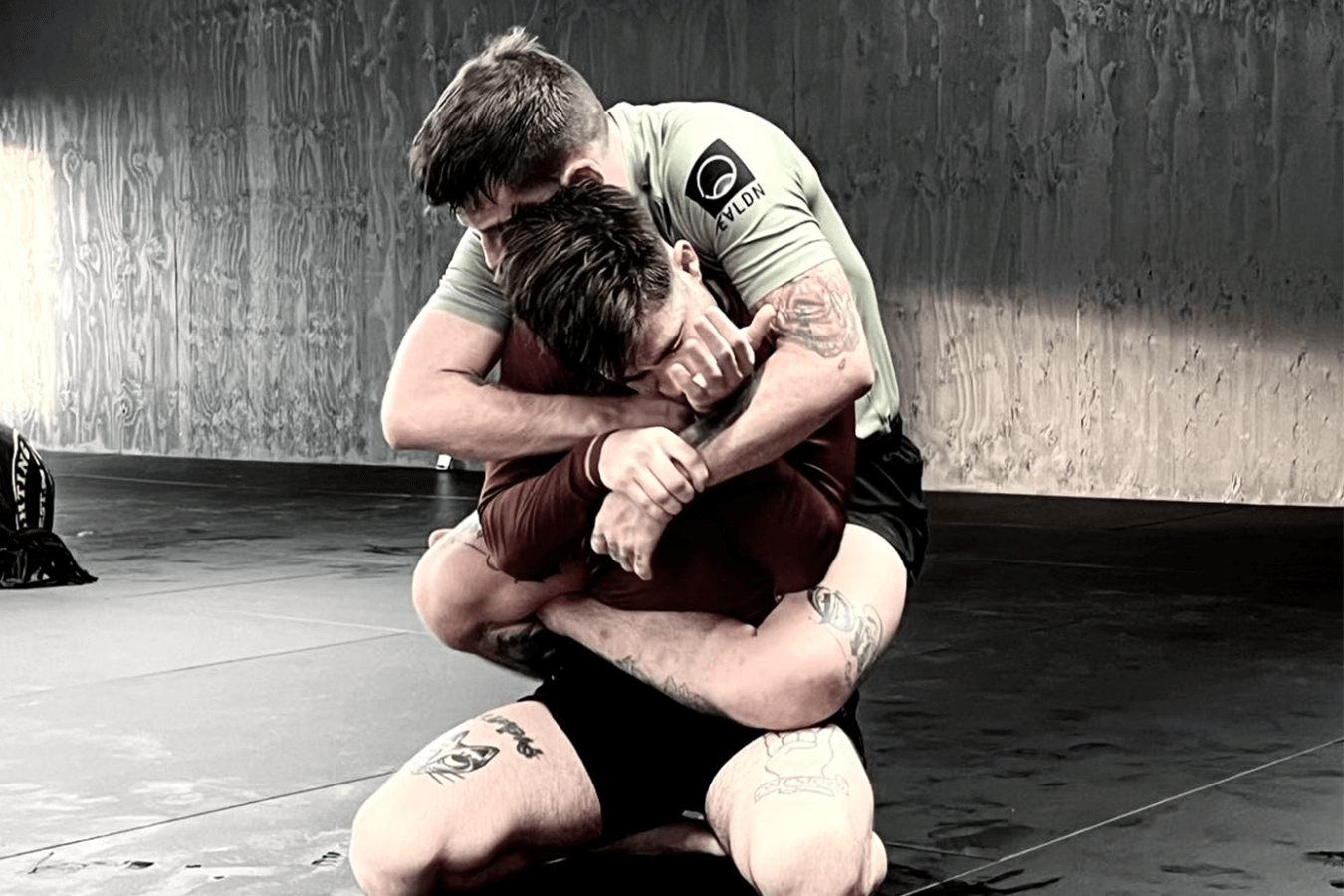
When you train against real resistance, your body and brain learn to work together quickly and on purpose.
If you have ever felt a step behind in sports, in the gym, or even just moving through a busy day, coordination is usually the missing piece. Coordination is not just balance or athleticism. It is the ability to connect what you see and feel to the right movement at the right time, especially when something unexpected happens. That is exactly why Grappling is such a powerful training choice for adults in Bridgeport.
In our academy, we build coordination and quick decision-making in a way that feels practical instead of overwhelming. We keep training structured, we focus on safety, and we use live rounds in controlled formats so you learn how to move with purpose against a resisting partner. Over time, the benefits start showing up everywhere, not only on the mats.
This article breaks down how our approach to no-gi submission training improves your movement, your reactions, and your ability to make smart choices under pressure. We will also connect what you do in class to what is happening in modern no-gi competition, where the pace is fast and the decisions are instant.
Why Grappling is a coordination sport first, and a strength sport second
Many people assume coordination is something you are born with. We see the opposite. Coordination is a trainable skill, and Grappling trains it constantly because you are always solving movement problems in real time. You are not repeating a technique into the air. You are learning how to place your hips, hands, head, and feet while someone is actively trying to disrupt those placements.
In no-gi, things move even faster because you cannot rely on cloth grips to slow the exchange down. You have to learn body positioning, pressure, and timing. That is why your footwork, your base, and your posture become habits, not just ideas you understand intellectually.
Coordination also shows up in transitions. For example, moving from a guard position to a sweep, or from a pin to a submission, requires layered movement. You are steering your partner while managing your own balance. When you do this repeatedly, your body begins to link actions together smoothly, and that smoothness is what people usually call being athletic.
The role of live positional rounds in building control
We use controlled live training because it is the most direct path to functional coordination. You can drill a movement, but you only truly learn it when another person gives you real resistance. The key is making that resistance appropriate for your level so you can actually learn instead of just survive.
One of the simplest and most effective tools we use is positional training. Instead of starting every round from standing and letting everything happen at once, we begin in a specific position and set a goal. This is where coordination improves quickly, because you are repeating the same kind of problem until your body starts solving it automatically.
In our beginner-focused Foundations classes, for example, we regularly run 6-minute rounds that start from core positions like guard and pins. You get enough time to feel what is happening, make adjustments, and try again, but not so much time that you get lost. Over a few weeks, students often notice that they stop thinking about every tiny step and start moving as a connected system.
How quick decision-making develops through realistic pressure
Decision-making in Grappling is not the same as memorizing techniques. A technique is a tool. Decision-making is knowing when to use the tool, when to switch tools, and when to abandon the plan and protect yourself. That skill only shows up when there is pressure, because pressure forces you to choose.
Live rounds create a safe version of a real problem. You are dealing with weight, balance, and unpredictability, but you can slow down, reset, and learn. That is why we do not try to rush you into chaos. We build your ability to see patterns first. Then we increase the pace as your comfort rises.
A helpful way to think about it is this: early on, you make decisions by guessing. With practice, you make decisions by recognizing. Recognition is fast, and speed is what most people want. The interesting part is that speed is usually a side effect of clarity, not effort.
What modern no-gi trends tell us about reacting fast
Even if you never plan to compete, it is useful to understand what high-level no-gi demands, because it reveals what skills matter when the pace is real. In major events like ADCC 2024, the numbers show how dynamic the sport has become. There were 62 takedowns in the male divisions, which highlights how important wrestling and rapid position-winning have become. The start of a match is no longer a slow feeling-out phase. It is often an immediate sprint for control.
At the same time, guard work still drives constant decision points. Guards led to 31 sweeps, 9 back takes, and 12 submissions, which means athletes are making split-second choices about off-balancing, exposure, and finishing sequences. Submission rates stay steady in elite no-gi, around 34 percent in ADCC and 36 percent in CJI, and most finishes are chokes at about 65 percent, with arm attacks around 20 percent. That is a clear reminder that timing and precision win more often than raw strength.
We bring that same lesson into the room in a way that fits real adults with real schedules. You do not need to train like a professional athlete to benefit from training methods that create fast recognition and calm choices.
Coordination you can feel: base, frames, and hip movement
If you want a practical definition of coordination for adult students, we keep it simple. Can you maintain balance while you move, and can you create structure while someone tries to fold you? Most of your early progress comes down to three physical skills that cooperate together.
Base and posture
Base is your ability to keep yourself upright and stable. Posture is the alignment that keeps you safe and mobile. When you improve both, you stop tipping over and you stop giving away easy attacks. That sounds basic, but it is a huge upgrade in everyday body control.
Frames and pressure
Frames are how you use your arms and legs to create space without panicking. Pressure is how you use your body weight and alignment to reduce your partner’s options. Learning to frame and apply pressure properly is a coordination lesson because it is not about pushing hard, it is about placing yourself correctly.
Hip movement and angle changes
In no-gi, your hips are your steering wheel. Shrimping, bridging, and re-guarding are not flashy movements, but they build the ability to rotate, shift weight, and move in tight spaces. Over time, these movements become smoother, and that smoothness translates into better overall athletic control.
How our class structure keeps learning fast and manageable
Adults learn best when training feels organized. You want to work hard, but you also want to understand what you are doing. We structure classes to build skill in layers: technique, focused practice, then live application. That order matters. It keeps you from collecting random moves with no plan.
Here is what many students experience in a typical week, especially early on:
• Clear themes for the day, so you are not guessing what to focus on
• Partner drills that emphasize correct movement instead of rushing
• Positional rounds that isolate a skill like guard retention or escaping pins
• Longer live rounds in all-level sessions where decision-making expands
• Coaching that helps you find one adjustment at a time, not twenty
This kind of structure is what makes submission grappling in Bridgeport approachable for beginners while still being challenging for experienced students. You are not thrown into the deep end without tools, but you are also not stuck doing only choreographed repetitions.
The standing phase: fast decisions before you ever hit the ground
Because no-gi has leaned heavily into wrestling-style engagement, the standing phase matters more than ever. Standing exchanges are decision-heavy because positions change quickly, and small mistakes create big consequences. The skill is not just shooting takedowns. The skill is reading distance, hand fighting safely, and knowing when to commit.
We train standing in a way that builds confidence without turning every session into a collision. You learn how to maintain posture, protect your legs, and recover quickly if something goes wrong. This is another place where Grappling improves coordination: your feet, hands, and head position have to work together instantly.
When your standing game improves, you also notice something off the mats. You move with better balance. You feel less clumsy. You react faster when you slip, bump into something, or need to change direction quickly. It is not magic, it is just reps.
The ground phase: decision trees that make you calmer under stress
Once you hit the ground, decision-making becomes a series of branching choices. If your partner turns in, you do one thing. If your partner turns away, you do another. If your frames collapse, you change the plan. That branching is why Grappling can feel like chess, but with your whole body involved.
We teach you to organize those branches into priorities. Escape first. Then improve position. Then attack. That order reduces panic and makes your choices cleaner. It also keeps training safer because you are less likely to do something reckless when you get tired.
This is especially important for adult submission grappling in Bridgeport because many students are balancing training with work and family. You want hard rounds, but you also want to wake up feeling good the next day. Smart decision-making supports both performance and longevity.
A simple progression that improves both coordination and speed
You do not need a complicated plan to get better. You need consistency and a progression that matches how adults actually learn. Here is the progression we guide you through, whether you are brand new or returning after time away:
1. Learn positions and survival habits so you can stay safe and breathe
2. Build escapes and guard recovery so you can reset bad situations
3. Add sweeps and takedowns so you can put yourself on offense
4. Develop submissions with timing so you finish without forcing
5. Blend everything through live rounds so decisions become automatic
This is where the biggest coordination gains happen. When your body can flow from one step to the next, you stop feeling stuck. When you stop feeling stuck, you start seeing openings sooner. That is the moment people describe as everything clicking.
Community training that accelerates adaptation
One advantage of training in a consistent room is that you get exposed to many body types and styles of movement. That variety forces adaptation, which is the real engine behind quick decision-making. You learn how to adjust when a partner is taller, shorter, stronger, more flexible, or more experienced.
We also keep opportunities for extra mat time through weekly open mats, and we offer free women’s-only classes to make sure more people can access training in a comfortable format. More rounds with different partners means more chances to sharpen your coordination, not just your conditioning.
If you want your Grappling to feel usable, not theoretical, consistent live work with supportive coaching is the fastest path we know.
Take the Next Step with Connecticut Submission Grappling
If your goal is better coordination, faster reactions, and the ability to make calm choices under pressure, our training is built for that. At Connecticut Submission Grappling, we focus on no-gi skill development through structured classes, controlled live rounds, and a welcoming environment for beginners and experienced students alike.
When you are ready to try submission grappling in Bridgeport in a way that feels organized and realistic, we will help you start with a clear plan, follow the class schedule that fits your life, and build the kind of decision-making that carries over far beyond the mats.
Bring these techniques into live training by joining a grappling class at Connecticut Submission Grappling.