
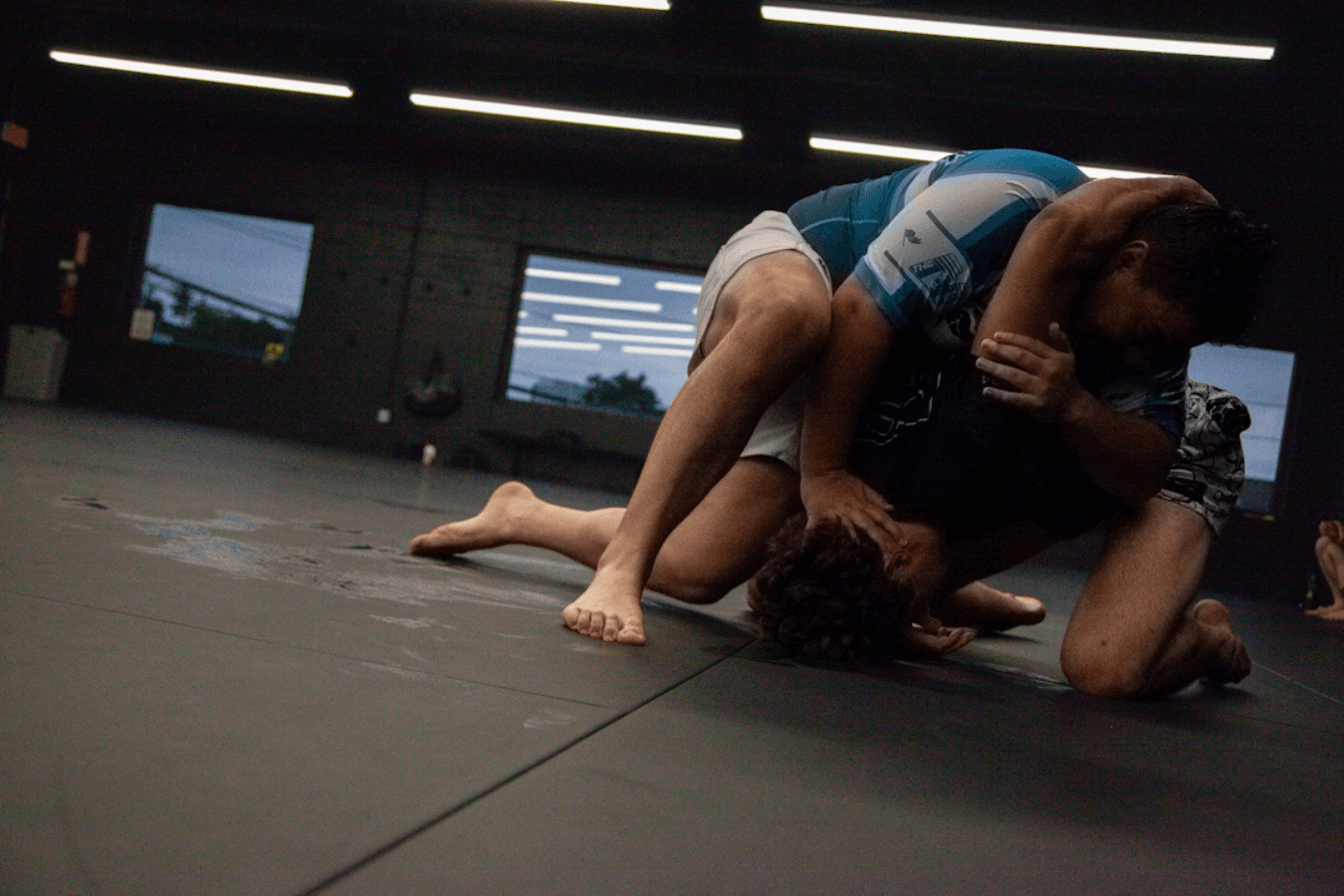
Grappling gives your mind something real to do, and that simple shift can change how your whole week feels.
Life in Bridgeport moves fast, and anxiety often shows up in quiet ways: tight shoulders on the drive home, a brain that will not stop scanning for problems, sleep that feels too light. We see a lot of adults who do not want another “hack” or pep talk. You want something practical that helps you feel steady again, and you want it to fit real life.
Grappling does that in a surprisingly grounded way. When you are learning to control position, breathe under pressure, and solve problems with your body, the mental noise has less room to take over. In our room, you are not performing for anyone. You are training skills, building fitness, and letting the nervous system learn a calmer default.
If you are curious about submission grappling in Bridgeport, the biggest takeaway is this: you do not need to be “tough” to start. You just need a place where training is structured, safe, and coached with intention, so you can build confidence without getting overwhelmed.
Why anxiety responds so well to Grappling training
Anxiety is not only thoughts. It is also physiology: shallow breathing, tension, elevated heart rate, and that wired feeling that makes small tasks feel bigger than they are. Grappling puts you into a controlled challenge where we can practice those exact signals in a safe setting, then teach you how to manage them.
When you learn to stay calm while someone is applying pressure (not hurting you, just giving you a real problem to solve), you train the skill of regulation. You get immediate feedback. If you tense up and panic, you gas out. If you breathe, keep your posture, and choose the next step, you last longer and improve faster. That lesson follows you out the door.
There is also something important about the clarity of the task. During Grappling, you cannot multitask your worries. You are present because you have to be. That “forced focus” can feel like a mental reset, especially after a day of screens, notifications, and constant decision-making.
The wellness side you can actually feel week to week
Wellness can be vague until you notice specific changes. Most adults who stick with training for a few weeks tell us they feel different in measurable ways: better sleep, improved energy, and a calmer baseline in situations that used to spike stress.
That happens because the work is full-body and skill-based. You are improving cardio, mobility, and strength, but you are also learning timing and control. The body gets tired in a good way. The mind feels used, too, but not drained. More like organized.
We also build consistency into the program. A weekly routine matters for anxiety, because predictability helps your system settle. When training becomes one of the stable points in your schedule, it quietly supports everything else you are trying to do for your health.
What “pressure” means in Grappling, and why it builds resilience
Pressure in Grappling is not about getting smashed for an hour. It is about learning how to create and relieve pressure through technique: posture, frames, angles, and leverage. Our coaching keeps the training productive, and we scale intensity so you can learn without feeling thrown into the deep end.
Resilience is built when you experience stress in manageable doses, recover, then repeat. That cycle is basically the blueprint for progress in training and in mental health habits. You practice hard things, realize you can handle them, and your confidence becomes more real than motivational quotes.
You also learn that “stuck” is rarely permanent. In a bad position, there is usually a next step: recover guard, build a base, create space, stand up. That mindset can be a relief if anxiety tends to make you feel trapped by your own thoughts.
The social component: community without the awkwardness
A lot of adults want community but do not want forced small talk. Training tends to solve that. You meet people because you share work, not because you are trying to network. You partner up, learn together, and the relationships build naturally.
And yes, it is normal to feel a little nervous about walking into a new gym. We keep the environment structured and respectful, because that is what makes learning possible. Nobody is expected to “prove” anything. You show up, you learn, you get better.
For many people, that steady contact with a supportive group becomes part of the wellness benefit. It is easier to manage anxiety when you are not doing everything alone.
How our classes are structured for adult beginners
Adults learn best when the path is clear. Our classes are coached so you understand what you are doing and why it works, not just copying movements. You will learn positional control, escapes, and submissions with an emphasis on safety and progress.
We also pay attention to pacing. A common fear is “I am going to be exhausted and embarrassed.” You will get a workout, but you will also get breaks, instruction, and time to ask questions. You can train hard without feeling like you are barely surviving.
If your goal is adult submission grappling in Bridgeport, we design training so you can build a foundation even if you are starting from zero athletic background. You do not need to be in shape to start. Training is how you get in shape.
What you can expect in a typical session
Here is a simple overview of how a session usually feels, especially in beginner-friendly classes:
• Warm-up and movement that supports joint health, balance, and basic conditioning
• Technique instruction with details on posture, grips, and safe mechanics
• Partner drilling to build comfort and repetition without rushing
• Live rounds that match intensity to experience level and goals
• A quick reset at the end so you leave feeling worked, not wrecked
That structure matters for anxiety. Predictable flow lowers uncertainty, and clear coaching reduces the mental load of guessing what to do.
Why Grappling improves confidence without turning you into a different person
Confidence from training is not loud. It is quiet and useful. It shows up when you carry yourself differently, set boundaries more easily, and feel less reactive when something unexpected happens.
Grappling helps because it is honest. Techniques either work or they do not. Over time, you build skill through repetition and small wins: escaping a position you could not escape last month, staying calm through a tough round, remembering to breathe when you would normally hold your breath.
That kind of progress can be especially meaningful if anxiety has been shrinking your comfort zone. Training expands it again, in a way that is earned.
Safety, consent, and control: the wellness foundations people overlook
Wellness and combat sports can sound like opposites if you have never trained. The reality is that good coaching creates safety through structure, communication, and mutual respect. We take tapping seriously, and we coach control. You are never supposed to “push through” a bad position that risks injury.
We also encourage you to advocate for yourself. If you need to slow down, you can. If you have an old shoulder issue, we adjust. If you have a stressful week and need a lighter session, that is still training. Consistency beats intensity for long-term anxiety reduction.
This is one reason submission grappling in Bridgeport can be such a strong wellness practice: you are learning self-protection skills while also learning how to listen to your body.
A simple way to start if anxiety has kept you on the sidelines
If anxiety has been keeping you from new environments, we recommend a small, straightforward approach. You do not need a perfect plan. You need the first step, then the next one.
1. Check the class schedule on the website and pick one time that feels realistic
2. Show up a little early so you can settle in and ask a couple questions
3. Focus on learning positions and breathing, not “winning” anything
4. Train consistently for a few weeks before judging progress
5. Notice what improves outside the gym: sleep, mood, patience, energy
That is it. Start small, stay steady, and let the benefits stack up.
How Grappling supports long-term mental health habits
We are careful with big claims. Grappling is not a replacement for therapy or medical care, and we will never frame it that way. But it can support the same goals many people work on in mental health: emotional regulation, body awareness, stress tolerance, and healthier routines.
Training also gives you a place to put restless energy. If your anxiety tends to show up as agitation, overthinking, or that feeling of being “on,” physical problem-solving is a practical outlet. You leave having done something concrete.
Over the long term, Grappling can become part of your identity in a healthy way: you are someone who trains, learns, and keeps going. That story is powerful, especially when anxiety has tried to write a smaller story for you.
Ready to Train with Us in Bridgeport
If you want a healthier way to manage stress while building real skills, our approach at Connecticut Submission Grappling is simple: structured coaching, safe training, and a culture where adults can learn at their own pace without ego. Grappling is challenging, but it is also one of the most reliable ways we know to turn anxious energy into focused progress.
Whether you are brand new or returning after time away, we will help you plug into adult submission grappling in Bridgeport with a plan that makes sense for your schedule and your goals, then support you as the results start showing up in daily life at Connecticut Submission Grappling.
Turn knowledge into mat time by joining a grappling class at Connecticut Submission Grappling.