
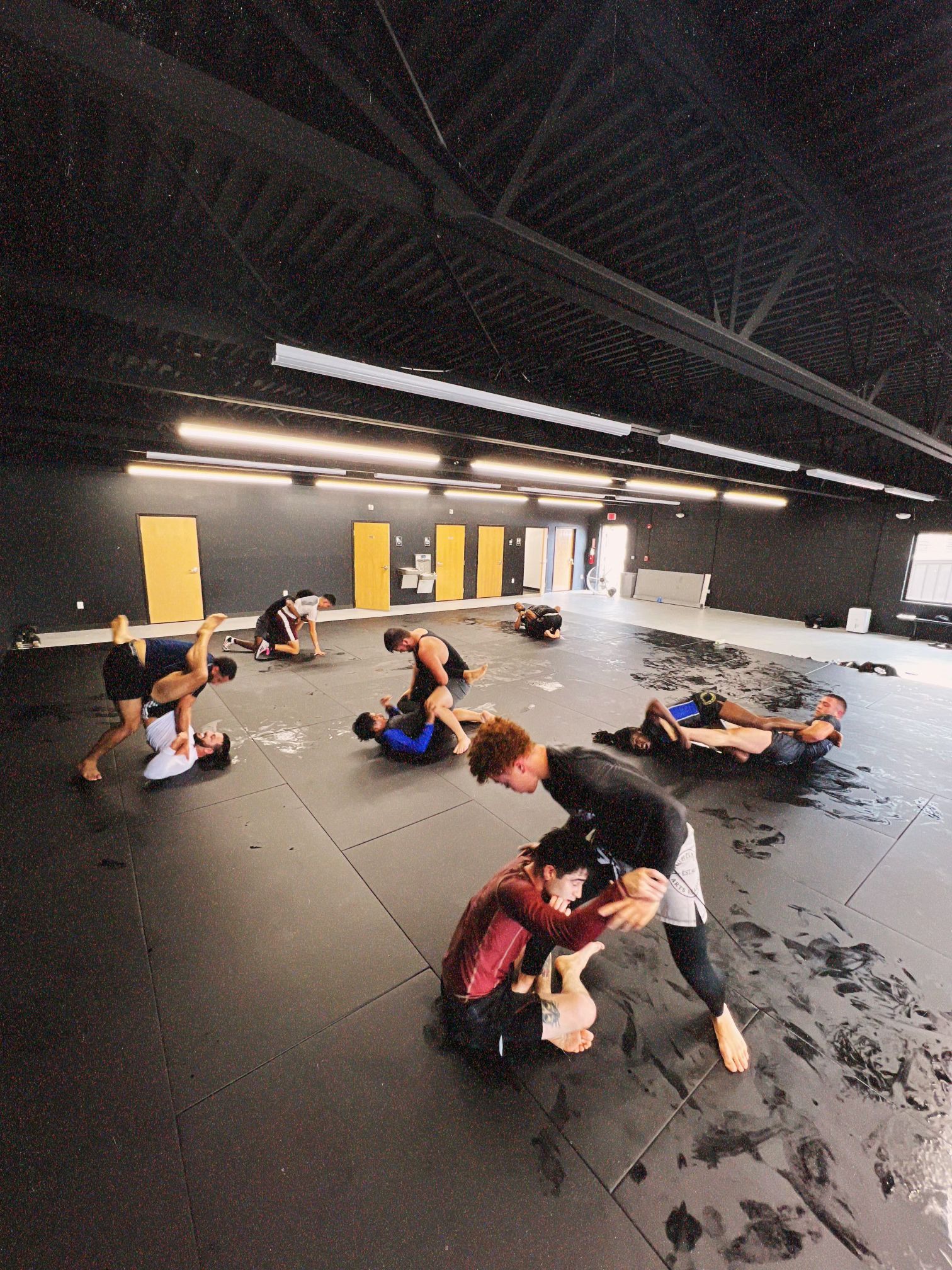
When your training has clear milestones, your motivation stops relying on mood and starts relying on progress.
Grappling works best when you can see where you are, what to fix, and what to aim for next. In Bridgeport, we structure training so you are not guessing at progress or bouncing from random technique to random technique. You show up, you train, you measure something, and you leave with a next step that actually makes sense.
That structure matters for adults especially. Adult schedules get crowded fast, and it is easy to quit anything that feels vague. Our approach makes your training feel like a plan you can follow, not a mystery you hope works out. Grappling becomes a practical way to build discipline, confidence, and momentum you can repeat in the rest of your life.
A useful detail from elite competition helps explain why goals in our room stay concrete. At the 2024 ADCC World Championships, 34 percent of matches ended by submission. And of those finishes, chokes led the way at 65 percent, with arm attacks around 20 percent and lower-body submissions around 22 percent. We use that kind of reality check to help you set goals around what works and track the skills that most often create results.
Why Grappling Naturally Creates Better Goals Than Most Fitness Plans
Most fitness plans give you one main metric: effort. Work hard, sweat a lot, maybe lose weight, maybe get stronger. That is fine, but it can feel slippery because effort does not always translate into a clear outcome you can name.
Grappling forces clarity. Either you held position or you did not. Either your escape worked or it did not. Either your choke mechanics were tight or your training partner slipped out. That honesty is not harsh, it is helpful. It gives you immediate feedback that turns into better goal setting.
There is also a built-in progression model that keeps you from trying to sprint before you can walk. We teach fundamentals first, then layer complexity. That mirrors how effective goals work in the real world: short-term wins that stack into long-term capability.
Our Progression Model: From “Survive the Round” to “Run the Round”
When people hear “goal setting,” the first thing that pops into mind is big goals. Compete. Win a tournament. Get promoted. Those are great, but we prefer starting with goals that match your current reality.
Early on, your goals might be simple:
- Learn how to keep your base without tipping over
- Recognize common positions so you stop feeling lost
- Escape bad spots with a step-by-step process
- Finish one reliable submission with good mechanics
As you improve, the goals evolve. You begin to plan your rounds instead of just reacting. You start linking techniques together. You can tell the difference between forcing something and setting it up. That is when training gets really fun, because you can feel yourself making decisions with purpose.
Milestones You Can Actually Track Week to Week
We keep progress measurable because motivation likes proof. Some weeks you might not feel amazing walking in, and that is normal. But if you can point to improvement, you stay consistent.
Here are a few examples of measurable milestones we use in class:
- Time-based goals, like holding a position for 20 to 30 seconds against resistance
- Attempt-based goals, like hitting three clean entry attempts in a round even if you do not finish
- Defense goals, like not giving up your back for an entire session
- Technical goals, like completing the same escape correctly multiple times in a row under pressure
This is also how belt promotions and technique mastery make sense. Promotions are not random rewards. They represent milestones in skill, decision-making, and composure. That is achievement you can feel in your body, not just a symbol.
Setting “High Percentage” Technique Goals (Using Real Competition Data)
A lot of people waste time chasing flashy techniques too early. We like cool techniques too, but we also want your training to pay off. So we point you toward high percentage skills and we help you build a simple plan around them.
Elite data from ADCC gives a helpful direction. If chokes account for 65 percent of submission finishes, it makes sense to prioritize choke fundamentals, finishing mechanics, and control positions that lead to chokes. Arm attacks and leg attacks matter as well, and we train them, but we want you to invest first in what consistently shows up at the highest levels.
This is not about copying a pro game in week two. It is about learning what works and building your own version of it based on your body type, athletic background, and comfort level.
A Simple Goal Ladder We Use for Faster Progress
If you like structure, this is a clean way to think about your next 60 to 90 days:
1. Control first: Pick one top position and one pin you want to hold reliably
2. Escape second: Choose one bad position and build a complete escape route
3. Finish third: Add one choke and practice the finish mechanics until it feels automatic
4. Connect fourth: Learn one setup that leads into your choke without forcing it
5. Pressure test: Use live rounds to measure if you can apply it under real resistance
That ladder keeps your goals practical. It is also how adult submission grappling in Bridgeport stays sustainable for busy people. You train with a plan, not with random intensity.
How Our Classes Turn Big Goals Into Weekly Wins
Some people come in wanting to compete. Some people come in wanting a new challenge that is not another treadmill routine. Either way, the key is turning the big goal into weekly behaviors you can control.
We build classes with that in mind. You will drill, you will practice with increasing resistance, and you will do live rounds where you learn what holds up under pressure. You are not left alone to guess what to work on next. We coach the details, because details are what turn effort into improvement.
This is where Grappling becomes a surprisingly effective tool for adult goal setting. You can walk in with a stressful day behind you and still leave with one small technical win. Over time, those small wins change how you see yourself. You become the kind of person who follows through.
What You Learn About Achievement When You Train With Resistance
Resistance changes everything. When a partner is actively trying to stop you, your goal setting becomes more honest. You stop setting goals like “get better” and start setting goals like “finish this sequence against a partner who knows it is coming.”
That kind of honesty is a gift. It teaches you to aim at behaviors, not vague outcomes. It also teaches patience. Some skills take time to click, and that is fine. We would rather you build real ability than rush into shortcuts that fall apart.
The Adult Experience: Why Consistency Beats Intensity
Adults often worry about two things before starting: getting hurt and being the least experienced person in the room. We plan around both concerns.
Our coaching emphasizes control, pacing, and safe training habits. You will learn how to train hard without training reckless. That matters for longevity. If your goal is to show up for months and years, not weeks, your body has to feel respected.
And if you are new, you are not “behind.” You are just at the start of the progression. We guide you through fundamentals and help you set beginner goals that are achievable quickly, because early momentum matters.
In submission grappling in Bridgeport, a lot of people are looking for something that improves fitness and focus without feeling like another chore. Training can be tough, yes, but it is also oddly grounding. You do the work, you breathe, you solve problems, you get a little better. It is simple in the best way.
Using Data-Driven Training Without Making It Weird
Tracking progress does not have to mean spreadsheets and obsession. For most students, simple tracking is enough:
- Note one technique you are focusing on this month
- Record one problem position you keep ending up in
- Track one measurable win each week, even if it is small
- Ask us what your next “one thing” should be
We also keep the room aligned with current trends toward precision finishing. The ADCC stat line is a reminder that the best results come from clean mechanics, not frantic effort. When your goals focus on precision, you improve faster and you feel more in control.
How We Help You Aim at Milestones Like Promotions and Competition
If your goal includes promotion milestones, we help you understand what those milestones represent. It is not about collecting ranks. It is about building skill that holds up during live rounds.
If your goal includes competition, we help you build a plan that fits your schedule and your experience level. Training for competition is still goal setting, just with sharper deadlines. You will work on pacing, scoring awareness, and, most importantly, having a small set of reliable tools you can execute under stress.
Common Goal-Setting Questions We Hear in Bridgeport
How does progression work for beginners?
We start you with fundamentals and build your base so you can train safely and confidently. Your early goals focus on positions, escapes, and one or two core submissions so you feel progress fast.
What submissions should I focus on first?
We use high-percentage trends to guide priorities. Chokes are a strong early focus because they consistently finish matches at the highest level, and they teach control, timing, and pressure.
Can adults realistically hit advanced goals?
Yes, with consistency and a plan. Adult submission grappling in Bridgeport works when you train in a structured way, track your milestones, and let progress compound. You do not need unlimited time. You need a repeatable process.
Take the Next Step
Building goals that stick comes down to structure, feedback, and a room that makes progress easy to measure. That is exactly how we run training at Connecticut Submission Grappling, and it is why Grappling becomes more than a workout here. You are developing a skill set with milestones you can see, feel, and earn.
If you want your training to support bigger life goals like discipline, consistency, and confidence under pressure, our classes give you a clear path forward. Connecticut Submission Grappling is here in Bridgeport to help you start, refine, and keep achieving, one focused session at a time.
Experience the training culture that sets Connecticut Submission Grappling apart by joining a class today.