Real progress in Grappling comes from training that scales with you, not from memorizing moves you never get to test.
Grappling looks simple from the outside: get control, advance position, finish. Then you actually step into class, make first contact, and realize how quickly everything changes once there’s real resistance. That moment is where progress begins, but it’s also where a lot of people get stuck if the training doesn’t give you a clear path forward.
Our job is to make that path obvious. In Bridgeport, we coach Grappling as a progression, not a random collection of techniques. You build a base you can rely on, then we steadily increase the variables: pace, starting positions, standing engagements, round length, and decision-making pressure. Over time, you don’t just learn more. You become harder to hold down, harder to sweep, and calmer in situations that used to feel chaotic.
What “progression” actually means in Grappling
Progression is not “today we do an armbar, tomorrow we do a leg lock.” Real Grappling progression is a shift in your ability to solve problems under pressure. You learn how to keep yourself safe, how to get to strong positions, and how to force predictable outcomes even when the other person is doing everything possible to stop you.
We treat skill as something you earn in live situations, but in a way that’s scaled to your experience. Early on, too much randomness can feel like drowning. Later, too much structure can feel like you’re shadowboxing. The sweet spot changes as you change, so our training changes with you.
A simple way to think about it: the better you get, the more freedom you need in order to keep improving.
Stage one: the novice foundation (0 to 2 years)
If you’re new, your biggest challenge usually isn’t toughness. It’s overload. You’re trying to breathe, remember what you were told, and figure out where your hands should go while someone is actively trying to fold you up. So we start with a foundation that keeps the learning honest without making it chaotic.
Our Foundations approach uses controlled live games, meaning you still get real resistance, but we narrow the focus so you can actually understand what’s happening. Instead of “roll and see what happens,” we might begin from a specific position like guard or pin control and work six-minute rounds with constraints that keep the reps meaningful.
Here’s what we want you to get good at early:
• Framing and posture so you can stop getting flattened
• Guard retention basics so your legs become a real shield
• Escapes that work because you can hit them against resistance
• Top pressure habits that make you feel heavy without muscling
• Safe, reliable control before chasing flashy submissions
This stage is where you earn the right to learn faster later. It’s not glamorous, but it’s the part that makes everything else click.
Why we use live training early (and how we keep it safe)
We’re known for live training, but live doesn’t mean reckless. It means your learning has to survive contact with reality. A technique you only hit on a cooperative partner is basically a nice idea. The moment someone resists, timing and positioning matter more than the “steps.”
So we coach you to train hard in a controlled way. That includes selecting starting positions, limiting variables, and teaching you how to match intensity with your partner. It also includes learning when to let go, when to tap, and when to reset. The goal is consistency. You can’t build Grappling skill if you’re always nursing something.
And yes, you’ll still get tired. That’s normal. Your conditioning catches up faster than you think when the training is structured.
The core positions we expect you to own before “advanced” feels right
People love to ask about submissions. We get it. But the fastest way to become dangerous is to become hard to control and hard to escape from once you’re on top. Submissions show up more often when the position is already winning.
In our progression, we place a lot of emphasis on positional clarity. Before you consider yourself “advanced,” you should feel functional in these areas:
Guard and guard retention
Guard is not just “being on your back.” It’s your ability to manage distance, off-balance, and create angles. Retention is what keeps you from getting passed into bad spots repeatedly. When guard starts to feel like a place you can work instead of a place you survive, your Grappling takes a big step forward.
Pin control and passing
Top control is where pressure becomes a skill. Passing is not a sprint around the legs. It’s a series of decisions that lead to stable control. When you learn to slow the scramble down and make your opponent carry your weight, your success rate rises without you needing to move faster.
Escapes and resets
Escapes are your confidence builders. The better your escapes get, the more willing you are to try things, because you’re not terrified of ending up stuck. We want you to escape in a way that leads to offense, not just “get out and immediately get re-pinned.”
Stage two: the intermediate bridge, where most people level up
Intermediate is where you start seeing the game. You recognize patterns, you anticipate reactions, and you stop giving away positions for free. It’s also where people sometimes hit a plateau, because they can “roll” but can’t explain why they win or lose exchanges.
This is where we tighten decision-making. We’ll add variability to the live games, extend the chains, and make you solve problems in sequence. You’re not just trying to hit a move. You’re trying to force a series of predictable reactions.
If you’re training submission grappling in Bridgeport and you want your improvement to feel measurable, this stage matters. You should be able to point to what changed: your first layer of defense is better, your guard lasts longer, your top pressure is more stable, and you’re getting to your preferred positions on purpose.
What modern competition trends tell us about what to prioritize
Even if you never plan to compete, high-level competition is a useful mirror. It shows what holds up when everyone is skilled, athletic, and prepared. One recent data point we keep in mind: at the 2024 ADCC World Championships, 34% of matches ended in submission. Of those submissions, chokes accounted for 65%, and arm attacks accounted for 20%. Also, wrestling and takedowns produced the highest number of successful actions, with 62 takedowns recorded in the men’s divisions alone.
That lines up with what we see in the room. Strong standing skills matter, but they matter most when they connect to control on the ground. And finishes tend to come from dominant grips and positioning, not desperation.
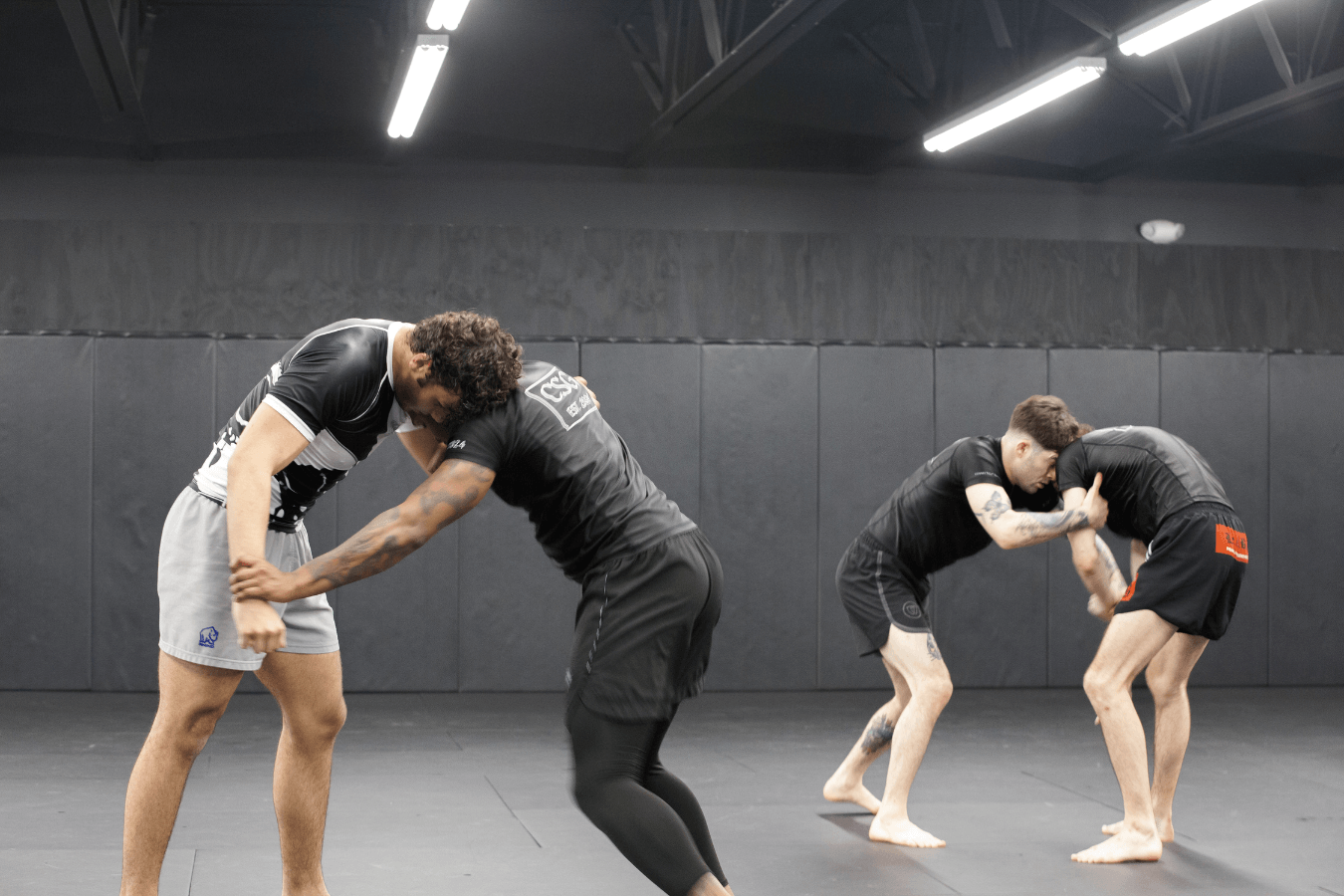
So our Grappling progression doesn’t treat takedowns as optional or “extra.” We integrate standing, entries, and transitions as you’re ready, so your skill is complete rather than lopsided.
Stage three: advanced Grappling, where freedom increases and standards rise
Advanced training is not about doing more techniques. It’s about handling more uncertainty while staying efficient. Rounds often get longer. Starting from standing becomes more common. Scrambles get sharper. And we expect you to manage pace without falling apart when you don’t get your preferred position immediately.
At this stage, we want you to:
• Win early exchanges through hand fighting and positioning
• Convert takedown attempts into top control, not chaos
• Maintain pressure without burning your arms out
• Threaten submissions to create movement, not just to “hunt”
• Make calm decisions when you’re tired and the round is still going
This is also where you begin developing a style. Some people become pressure passers. Some build slick guard-to-back pathways. Some become relentless from front headlock positions. Our role is to sharpen what works for you while keeping you honest in the positions you avoid.
Adult submission grappling in Bridgeport: what your week should look like
Most adults aren’t trying to train like full-time athletes. You have work, family, and a body that sometimes reminds you that you slept weird. We plan for that reality. Progress comes from consistency, not occasional heroic sessions.
A practical weekly rhythm for adult submission grappling in Bridgeport usually follows a simple progression:
1. Train 2 to 3 days per week until your body adapts and your timing improves
2. Keep one session focused on positional learning, not just open rolling
3. Add intensity gradually so your cardio improves without spiking injury risk
4. Track one “theme” per month, like guard retention or pin escapes
5. Reassess after 8 to 12 weeks based on what’s actually improving in live rounds
If you can show up consistently, you’ll feel the difference in a way that’s hard to miss: fewer panic moments, more control, and a lot more “I know what to do here” situations.
Common sticking points (and how we coach through them)
Every Grappling journey has friction. That’s not a flaw, it’s part of learning a real skill under pressure.
“I keep getting stuck on bottom”
We prioritize frames, hip movement, and escape sequences that start before you’re fully pinned. Often the fix is earlier than you think: better posture in guard, better reactions during the pass, and fewer bad gambles.
“I gas out fast”
We build your pacing with rounds that match your level, and we show you where you’re wasting energy. Beginners often squeeze too much and hold their breath. Once you relax into structure, your endurance jumps.
“I learn techniques but can’t hit them live”
That’s exactly why we anchor learning in live games. You don’t just need information. You need timing, and timing only appears when your partner can fight back.
“I’m nervous about starting”
That’s normal. The room can look intense from the outside. Our responsibility is to coach you into it step by step, with clear constraints, realistic expectations, and training partners who understand what it’s like to be new.
Take the Next Step
Building real skill takes a plan and a room that enforces it. That’s what we’ve built at Connecticut Submission Grappling: a progression where you start with controlled live training, develop reliable fundamentals, and then steadily expand into longer rounds, standing work, and higher variability as your Grappling improves.
If you’re looking for submission grappling in Bridgeport that doesn’t rely on scripted drilling, we’ll help you move from novice habits to advanced decision-making, one round at a time, with a structure you can feel working week to week.
Continue your grappling journey beyond this article by joining a class at Connecticut Submission Grappling.