
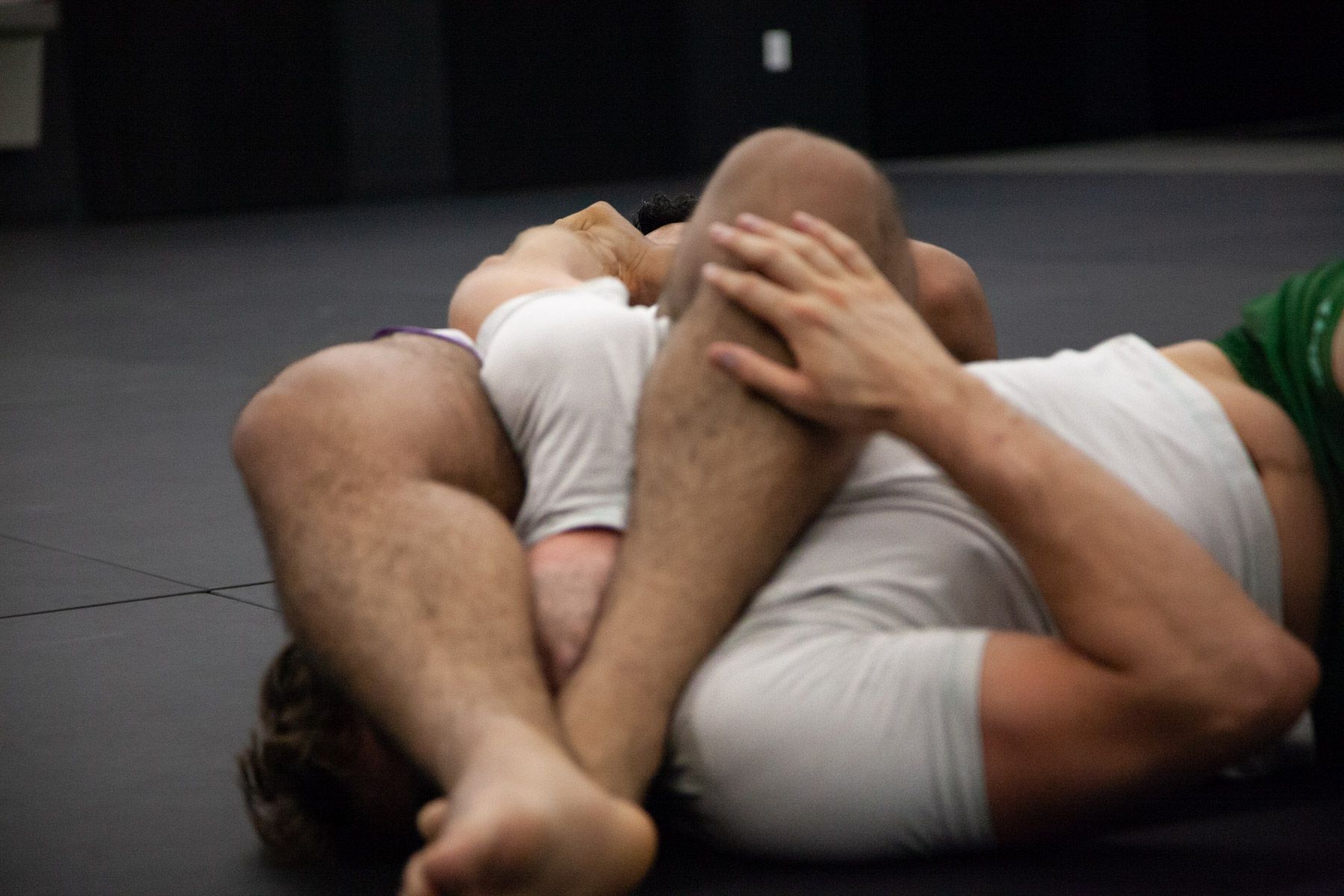
The right Grappling habits can keep you training longer, recovering faster, and competing with fewer setbacks.
In Bridgeport, a lot of athletes already lift, run, scrimmage, and grind through tough seasons, but injury time still sneaks in and steals weeks (or months) of progress. We get it, because we coach people who want to train consistently, not just start strong and disappear when something tweaks.
Grappling is a contact sport, so we never pretend it is risk-free. What we do believe, and what research keeps backing up, is that structured training, smart warm-ups, and progressive intensity can meaningfully reduce your chances of getting sidelined. That matters whether you are a high school athlete in the off-season, an adult looking to stay competitive, or someone who simply wants a body that moves better.
Below, we break down what actually causes common injuries, what prevention strategies work, and how we build a safer training culture right here in Bridgeport without watering down the realism that makes this sport effective.
Grappling and injury risk: what the numbers really say
If you have watched competitive matches, the injury potential is not hard to imagine. Studies on grappling sports report overall injury rates up to 19.6 per 1,000 hours of athlete exposure, and competition rates can spike to 109 injuries per 1,000 exposure hours. That is a big jump, and it explains why people who only “go hard” on competition pace, without the right base, tend to stack up nagging issues.
The most commonly affected areas show up again and again: knees, shoulders, and the lower back. And while dramatic injuries get the attention, many grappling injuries are sprains and strains rather than fractures. In plain terms, it is often soft tissue and joint stress, not bones, that causes the most missed training time.
So can Grappling help prevent injuries? Yes, when you train it the right way. You are practicing balance, body control, and load management under pressure. Those are exactly the qualities that protect athletes across sports, but only if your training is structured and your intensity is earned.
Why injuries happen in Grappling (and how we coach around them)
Most injuries are not random. In our experience, they come from a few repeatable patterns: poor positions, rushed transitions, fatigue, and mismatches in pace. Research also points to flexibility limitations and interlimb asymmetries as common traits linked with higher injury risk. Translation: if one side is tight or weak, or your hips and shoulders do not move well, your body will compensate under pressure.
The “too much, too soon” problem
A classic scenario is a newer athlete who feels athletic and wants to roll at full speed right away. Athleticism helps, but grappling is weird on the body at first. You are twisting, framing, bridging, posting, and resisting in angles that normal gym training does not fully cover.
Our solution is simple, and not glamorous: we scale intensity. We focus on positional rounds, controlled drilling, and clear rules for sparring. You still get a tough workout. You just build the kind of durable skill that holds up when things get fast.
The hidden danger of awkward posts and scrambles
Knees and shoulders often get irritated during fast scrambles, especially when someone posts an arm behind the body or plants a foot while the torso keeps rotating. That is not a moral failing, it is just what happens when your nervous system is still learning where your limbs are in space.
We coach cleaner movement patterns early: how to fall, how to base, how to turn the corner on a takedown, and when to concede a position instead of yanking a joint to “save it.” That is not quitting. That is long-term thinking.
The single biggest injury-prevention habit: a real warm-up
If you want one lever that pays off immediately, it is the warm-up. Research suggests warm-ups before grappling activity can reduce injury recurrence by up to 75%. That is not a tiny improvement. That is the difference between training year-round and constantly stopping to rehab something that never fully settles down.
A good warm-up is not just sweating for the sake of sweating. We want increased blood flow, better coordination, joint readiness, and sharper reactions. You should feel more connected to your movement, not just tired.
A simple Grappling warm-up we like (Raise, Activate, Mobilize)
Here is a clean structure you can use before class, open mat, or even a lifting session that supports your training:
• Raise: high knees jogging, heel to glutes, stance side shuffles, shoulder rolls, forward and backward rolls, light shuffle sprints
• Activate: walking lunges with thoracic rotation, bear crawls, wheelbarrow walks, Hindu press-ups, Hindu squats, controlled breakfalls
• Mobilize: inchworm walks, hip openers, shoulder range-of-motion work, and slow grappling-specific movement patterns
This is not about doing a hundred things. It is about doing the right few things consistently, so your body stops entering rounds cold and stiff.
Strength training that actually supports Grappling (without breaking you down)
Technique comes first, but strength training protects joints, improves stability, and helps you express skill under fatigue. The key is choosing movements that build resilience, not just ego numbers.
When athletes tell us their shoulders feel “loose” or their knees feel “touchy,” it is often a stability issue, not just a mobility issue. You want your joints to be able to hold position while your hips and spine generate force.
Key areas we prioritize for injury-resistant athletes
We like to keep this practical. If you are training Grappling regularly, these areas tend to give the biggest return:
1. Core stability: planks, dead-bug variations, controlled leg raises, and rotational anti-rotation work
2. Neck strength: gradual neck work and isometrics to help reduce whiplash-style stress from takedowns and snaps
3. Hip and knee stability: squats, split squats, lunges, hip bridges, and controlled single-leg work
4. Shoulder mobility and control: arm circles, wall slides, banded external rotations, and scapular stability drills
5. Hamstring and lower back flexibility: forward folds, hinging mechanics, and gentle spinal rotation work
6. Grip and forearm endurance: hangs, towel work, and controlled grip training that supports joint protection
If you are already lifting, you do not need to throw everything out. You just want to make sure your program supports the demands of grappling: rotation, isometrics, pushing and pulling in odd angles, and staying stable while someone tries to fold you.
Why structured prevention programs work (and what that means for you)
One of the most useful findings in sports injury research is that specialized prevention programs outperform “regular” warm-ups. For example, a Wrestling plus injury prevention program showed a 58% overall reduction in injuries in young wrestlers, including 71% reductions for ankle injuries and spine injuries, 60% for knee injuries, and 63% for shoulder injuries.
Those numbers are not magic. They come from combining strength, neuromuscular training, balance work, and stretching into a repeatable routine. In other words, the warm-up becomes part of the training, not something you rush through while chatting.
For Bridgeport athletes, the takeaway is clear: if you want to train hard, you need a plan that also trains your body to handle hard training.
How we keep training realistic while reducing avoidable injuries
We coach adults with different backgrounds: former wrestlers, people who played college sports, beginners who have never done a contact sport, and busy professionals squeezing training in after work. The only way to serve that mix is with a culture that respects safety and progression.
Here are a few ways we do that day-to-day:
• We build positional skill before we chase chaos: you learn to survive and escape before you rely on athletic scrambles
• We scale sparring intensity: not every round is a test, and you improve faster when you can actually repeat reps
• We emphasize tapping early and often: your ego heals slower than your elbow, so we keep it simple
• We coach clean mechanics: base, posture, hip position, and safe finishing details matter more than “going harder”
• We encourage recovery habits: sleep, hydration, and smart scheduling make your joints feel different, honestly
This approach is especially important for Adult Submission Grappling in Bridgeport, because adult bodies come with real histories. Old shoulder issues from baseball, a cranky lower back from desk work, knees that have seen too many pickup games. We can work with that, but we need to train with awareness.
When to get a professional assessment (and why it helps)
Sometimes your body is waving a little flag that says, “Fix this before it becomes a real problem.” If your shoulder keeps popping, your knee swells after every session, or your lower back locks up after takedown work, it is worth getting assessed.
Research notes that physical therapists can identify limitations in range of motion across joints, plus weaknesses or poor muscle control that become injury sites under the force of grappling. The benefit is not just treatment, it is clarity. You learn what is actually going on, and you can train around it instead of guessing.
We like proactive athletes. If you bring us that information, we can help you modify training intensity, choose safer positions, and rebuild confidence without sitting out longer than you need to.
What most new athletes in Bridgeport should prioritize first
If you are new to Submission Grappling in Bridgeport, the temptation is to collect techniques. But durability comes from fundamentals and repeatable habits.
We recommend focusing on three things for the first several months:
• Consistent warm-ups and mobility: treat it like part of class, not optional
• Positional escapes and defense: the better you defend, the less you panic and yank joints
• Controlled rounds with clear goals: aim to improve one slice of skill each session, not prove toughness
You will still sweat. You will still get challenged. You will just stack training weeks instead of stacking injuries.
Take the Next Step
If you want injury-resistant athleticism, Grappling can be a smart long-term investment, as long as your training has structure, progressive intensity, and a real prevention mindset. That is exactly how we run classes, because the goal is not to survive a few hard sessions, it is to keep you improving for years.
At Connecticut Submission Grappling, we coach Adult Submission Grappling in Bridgeport with the details that protect your body: warm-ups that make sense, technical progression that builds control, and a culture that respects training longevity while still pushing you to get better.
Turn these techniques into real-world skills by enrolling in a martial arts program at Connecticut Submission Grappling.